Posts

From the mouth of babes

Image
This post was contributed by worship leader Mike Hale. “I’m not really of much use to this church.  I’m only a volunteer worship leader, and not a full-time staff member.  My role here is so small, and besides, I really need to know a lot more about the theology of worship.” It was well over a dozen years ago, but still seems like yesterday.  I was feeling down and had begun to question my value as a volunteer member of a worship ministry team—wondering if those few hours of ministry each weekend were making any difference to anyone, and also wondering if I was really up to the task. Part of the problem was that for most of my adult life I’d been employed by a church, but severe budget cuts and large-scale layoffs had put an end to church employment, so it was easy to feel less a part of “real ministry.” Added to that, at the time I was stuck working as a temp on part-time jobs, and the kind of work wasn’t what I would have preferred as a career.  On the bright side,...

Concerning the sacraments

A trinitarian, incarnational understanding of the sacraments has significant implications for how we approach both baptism and the Lord's Supper. This issue is helpfully addressed by many trinitarian theologians. Here are two examples: Paul Fiddes writes in Participating in God: [We understand] the sacraments as pieces of earthly stuff that are meeting places with this [triune] God who exists in ecstatic movements of love. They are doors into the dance of perichoresis in God. [They are a means] of God’s gracious coming and dwelling with us. They are signs which enable us to participate in the drama of death and resurrection which is happening in the heart of God. We share in death as we share in the broken body of the bread and the extravagantly poured out wine, and as we are covered with a threat of hostile waters. We share in life as we come out from under the waters…to take our place in the new community of the body of Christ, and to be filled with the new wine of the Sp...

How do we worship in times of suffering?

Image
“Our small congregation has really been through a lot recently—several deaths, serious illnesses, unemployment, people moving away….we’ve been hit hard.” My friend was describing what he’s been facing as a ministry team volunteer, and I took no joy in letting him know he had also just described the exact condition of the small congregation I serve on the other side of town.  Over coffee we commiserated and talked about worship during times of trial and suffering.  Not meaning to sound trite—there seems to be more than enough suffering to go around. Events of last week brought more suffering into view.  I was assisting a local university’s Service Learning Program in Los Angeles consisting of six days of intensive, hands-on education at social service agencies of which just a partial listing includes an adult day care center for those suffering with Alzheimers, a global human rights agency fighting against genocides and caring for refugees, a social/psychiatric treatment c...

Question on John 3:36

Image
In John 3:36, we read this: Whoever believes in the Son has eternal life, but whoever rejects the Son will not see life, for God's wrath remains on them. How are we to read this statement? A lot depends on the lens through which we look. If it's a  theology of separation , this verse might be interpreted as indicating that God stands separate from and in wrath against all people *until* the moment they believe in Jesus, at which point God enters their lives (for the first time), stops being wrathful toward them, and grants them eternal life. But is that interpretation justified? We would say no, because it is inconsistent with what Scripture tells us about who God is, as revealed to us in the person of the incarnate Son of God, Jesus Christ. According to that revelation---reading this verse through that lens---rather than separate from sinners, God is  a friend of sinners;  God is Immanuel ---God with us and for us, the God of love who, in the person of Jesus, ...

Where is God when the world suffers?

The current tragedy in Haiti leads many to ask: Where is God when the world suffers?  For some, human suffering is evidence that there is no God. For others, it is evidence that God is either aloof (ignoring our suffering) or vengeful (causing it). The truth, revealed to us in the person of Jesus of Nazareth is this: God cares deeply, and is fully present with us in our suffering. We learn in Holy Scripture that God loved the world so much that he sent his one and only Son to become one of us in order suffer and die with us and for us (John 3:16). He did not come among us 2000 years ago, and he is not with us now, as a God of retribution who brings suffering upon his creation (John 3:17). No, the God we know in Jesus came and remains with us as Immanuel - God with us and for us - as one of us. God in the flesh (John 1:14). Through the Incarnation,  the Son of God, in the person of Jesus, took upon himself the fullness of our humanity - with all its sin and suffe...

Final quotes from "The God Who Believes"

Image
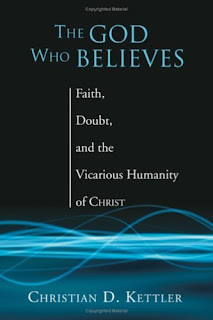
This post concludes a series reviewing Christian Kettler's book, The God Who Believes - Faith, Doubt, and the Vicarious Humanity of Christ .  For other posts in the series, click a number: 1 , 2 , 3 . We conclude now with several quotes from the book. "Jesus believes when I am unable to believe. Jesus acts when I am unable to act. Jesus loves when I am unable to love. Jesus forgives when I am unable to forgive. Jesus lives when I am dead in my sins. That is the power of truth become personal, the power of a vicarious life" (p. 102). "A vicarious life is a life that can be shared with others. The worship of the Father by the Son in the Spirit is but a part of a complete life of faith and obedience to the Father that in turn offers to us a share in this intimate communion between the Father by the Son in the Spirit. The Son indeed 'sanctifies' himself, sets himself apart for a holy use, for our sakes" [John 17:19 & Heb. 2:11] (p. 102). ...

2009—Nothing to brag about?

Image
This post was contributed by worship leader Mike Hale. Happy New Year!  However if you are anything like me and a lot of other folks, a big part of the celebration was shouting GOOD RIDDANCE to 2009!  What a year!  Almost nothing went according to plan, and there was plenty of what felt like failure, and not much to brag about.  And when enough things flop altogether or turn out dramatically different than you thought they would, at some point you not only feel a lack of power and wisdom—you wonder if you really know anything at all. So now its a new year and you definitely feel the need to look beyond yourself.  Help arrives with the inspired words of the Apostle Paul. Throughout the first two chapters of I Corinthians Paul describes God’s faithful love known in fellowship with the Son, Jesus Christ our Lord.   Paul proclaims the wisdom, power and grace that is Christ crucified—and says we share that wisdom and mind of Christ in our new life in Christ...

The Lion in Exile

Image
Dr. John McKenna Following is a gift to Surprising God readers from Dr. John McKenna, a trinitarian theologian and fellow traveler in the life we share with the Father, Son and Spirit. The Lion in Exile The other night, I dreamt of lions. I am a poor man and I do not think my dreams have any real value. I live in a rented room of a cheap hotel in the hum and drum of a graffiti written city. Dreams are things I throw into the trash, stuff I send down the toilet. I do not spend any more time thinking about them than I spend thinking about breathing. But since the lions, I have begun to change my mind about them. I was walking in a field of high grass and trees and the lions watched me intently, their faces kindly. They surprised me with their friendliness. Do not lions attack and eat us? My room is a barren place, a few pictures hanging on the walls, a cracked mirror above an old sink, a bathroom down the hall. I sleep in it, that is all. I like to walk. I walk most all day ...

Memories and music from the mountains

Image
This post was contributed by worship leader Mike Hale. The last few days we've been confirming logistics and details for tonight’s Christmas Eve service.  (Thanks coordinators and team members!)  As we’ve done for about ten years, two small congregations from different denominations (but bound to each other and to Jesus by the Holy Spirit) will come together on Christmas Eve to sing, pray, preach and present readings about the Father’s love known in the Savior Jesus and his breaking into his creation as God with us and for us. Tonight’s plan for music includes traditional carols, contemporary songs, children singing Tommy Walker’s Happy Birthday Jesus , and the service concluding with the singing of Silent Night as we light one another’s candle (originating from the Christ candle) and face one another in song.  I’ll be serving in one of my favorite ways—just singing harmony. Weeks ago I blogged about favorite Christmas CD’s from Chris Tomlin, Third Day and others, but i...

Sharing in Jesus' knowing, believing and obeying

Image
This post continues a series reviewing Christian Kettler's book,  The God Who Believes - Faith, Doubt, and the Vicarious Humanity of Christ .  For other posts in the series, click a number:  1 ,  2 ,  4 . In the last two posts, I've shared quotes from Christian Kettler's book, "The God Who Believes," in which he discusses Jesus' believing, knowing and acting on our behalf. Here are more: Lest we misunderstand, this does not mean that there is not a place for our own believing, knowing, and acting. According to Kettler, "Because Jesus believes for us does not exclude the imperative for us to believe!" (p. 71).  However, Kettler notes that "we do not initiate our knowledge of God" (p. 71). Jesus is the only human who truly knows God; and he shares, by grace, that knowledge with us. Thus the faith that saves us, is Jesus' faith, not our own. And his faith is grounded in his intimate knowledge of the Father. And so we know God, becaus...

More from The God Who Believes

Image
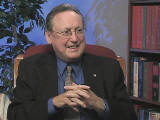
This post continues a series reviewing Christian Kettler's book,  The God Who Believes - Faith, Doubt, and the Vicarious Humanity of Christ .  For other posts in the series, click a number:  1 ,  3 ,  4 . Last time  we looked at representative quotes from Dr. Kettler (pictured at right). Here are some more: "The modern age...values...reason...[but] faith...confesses at times 'I don't know'...[We see this in Jesus, where] God has voluntarily restricted his knowledge in the person of the incarnate Son. The Son does not need to know, for in his humanity he possesses a faith that continually seeks understanding. The Son seeks understanding, as we know from the earliest days in the temple, where he was both 'listening to them and asking them questions' (Luke 2:46), increasing 'in wisdom and in years' (Luke 2:52). The Epistle to the Hebrews, indeed, speaks of the Son who 'learned obedience through what he suffered' (Heb. 5:8). Jesus' fa...

Pointing to the mystery of Christ

This post was contributed by worship leader Mike Hale. Christ’s birth into our humanity—the once and for all union of God and man—born of the virgin Mary and conceived by the Holy Spirit—is an awesome mystery and miracle that should drive us to our knees in humble thanks and worship. Yet we are told that many churches have either unintentionally or by design removed nearly any sense of mystery from weekly worship.  With an emphasis on doctrine, well-run family programs, pop bands and dogmatic cause-and-effect sermons on obedience and Christian living—with slick PowerPoint productions and a confident business-like delivery that includes an avalanche of texts and factoids—there is little room left for the appreciation of the mysteries of God and the recognition that we are dealing in faith with things of God that are beyond our comprehension. So observes Eddie Gibbs in ChurchMorph (2009 Baker Academic) and in Emerging Churches (2005 Baker Academic). Dr. Gibbs then explains that some ...

God's love revealed in Jesus

This post was contributed by worship leader Mike Hale. Can you feel the love?  In the power of the gospel and the presence of the Holy Spirit the Church proclaims a Jesus that is the love of God made personally known to humanity.  The weeks leading up to Christmas are a perfect time to point to this love.  But then, that same message of love should be on our hearts and minds every week of the year.  I’m reminded of when my friend said that after much searching he had finally found a congregation that he would call “home.”  The clincher for him was finding so much of the love of God there that he truly felt loved and accepted.  The pastor and the worship leader began nearly every service with confident and yet humble and gracious reminders of how completely God loves each person gathered there, and how much God loves every man, woman and child in the whole world.  Everything in the service was done under the umbrella of God’s love, and during numerous v...

The God Who Believes: the vicarious humanity of Jesus

Image
This post begins a series reviewing Christian Kettler's book,  The God Who Believes - Faith, Doubt, and the Vicarious Humanity of Christ .  For other posts in the series, click a number:  2 ,  3 ,  4 . Dr. Kettler shows how Jesus, as the representative and substitute for all humanity, has faith on our behalf. To view a "You're Included" interview with Kettler, click here . Fundamental to the thesis of Kettler's book, is the Christian doctrine of the vicarious humanity of Jesus Christ . Here are a few representative quotes: "As common as it has been to consider Christ's death to be vicarious, carried out in our place and for us, what if we were to consider that the entirety of his humanity was lived vicariously for us and in our place?" (p. x). "Can we say that Jesus believes, not just as an example of a believer, but believes for me and in my place vicariously, so that I can be helped in my unbelief (Mark 9:24)?" (p. xii). ...

Interview with Michael Horton in Christianity Today

Image
Michael Horton was interviewed in the November 2009 Christianity Today.   I find his comments both helpful and insightful, flowing as they do from a biblical understanding of the gospel of God's grace in Jesus.  Here's part of what he says: "In such a therapeutic, pragmatic, pull-yourself-up-by-your-bootstraps society as ours, the message of God having to do all the work in saving us comes as an offensive shot at our egos...The gospel has nothing to do with what I do. The gospel is entirely a message about what someone else has done not only for me but also for the renewal of the whole creation." You can read the full interview, titled "Christ at the Center," by clicking here . Let me know what you think.

Christmas Readers Theater

Special thanks to Rick Shallenberger for providing Christmas Readers Theater dramatic readings.  You can download the pdf file from the following link: http://www.wcg.org/MinDev/Web%20Documents/Christmas_Readers_Theater.pdf

The Trinity imaged in our humanity

Image
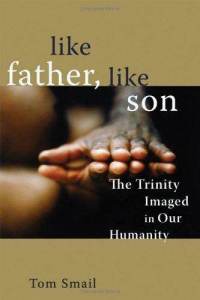
In a former post  I quoted Tom Smail's book, "Like Father, Like Son, the Trinity Imaged in Our Humanity." Here are additional quotes from chapter 1: If we are made in the image of God, we are made in the image of the Trinity; and the life of the Trinity must in some sort be reflected in the pattern of our human life. (quoting John F. X. Hariott in the flyleaf) To make gods in the image of men is the essence of all idolatry, whether the resultant idols are the physical artifacts of our hands or the cerebral projections of our minds, and the result of both is an impotent religion that imprisons us in its illusions and distracts and distances us from the genuine sources of our liberation. (p. 19) If the idols of our own making that reflect our own image are toppling all around us, it might be time to ask, What vision comes into focus when we see ourselves not as the masters but rather the mirrors of an ultimate reality on which we depend? Is there any word from ou...

Songs for the coming of Jesus

Image
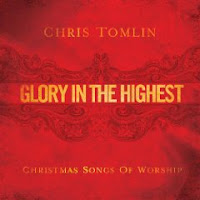
This post was contributed by worship leader Mike Hale. A stellar 2009 Christmas album is Glory in the Highest: Christmas Songs , from Chris Tomlin (and friends) – a collection of traditional songs recorded live in a worship setting, along with outstanding new praise and worship material such as Born That We May Have Life , Emmanuel (Hallowed Manger Ground) , My Soul Magnifies the Lord, Matt Redman’s Light of the World and several more.  Separate accompaniment tracks can be purchased. Other favorite holiday albums from recent years include Third Day: Christmas Offerings (2006) with the powerful and distinctive southern rock vocal styling of lead singer Mac Powell and the great sound of a band that has been a fan favorite at Christian concerts for years.   This Is What Christmas Means to Me (2007) by Tommy Walker and the C.A. Worship Band is described by Tommy as a worship project with Christmas as the theme. Tommy is a prolific songwriter with a unique blend of pop/jazz/R&...

From Hope to Joy: Advent and Christmas/Epiphany

Image
This post was contributed by worship leader Mike Hale. To be sure, the decorations, gifts, candy and cookies were huge hits, but even as a child, church events around Christmastime captured the imagination of this Illinois boy.  Powerful stories and songs about the coming of Jesus carried anticipation, drama, miracle, mystery, wonderment, and celebration that brought together God, angels and all people—including a kid like me.  From small simple gatherings to elaborate pageants, each created special memories and valuable open-ended questions.  And that's one more reason this blog exists about Christ-centered theology that shapes worship. I’d like to suggest four helpful books—two that address the entire church year, and two that are specific to Advent, Christmas and Epiphany (each book is available at Amazon.com).  Even if you normally do no more than light another candle on the Advent wreath and add one more verse of  “O Come, O Come Emmanuel” each week—these b...