Posts

George MacDonald

Image
Nineteenth century author, poet, theologian and pastor  George MacDonald (1824-1905), influenced many authors and theologians after him, including C.S. Lewis, who wrote the following concerning MacDonald in the introduction to his book, George MacDonald: An Anthology: "This collection...was designed not to revive MacDonald's literary reputation but to spread his religious teaching. Hence most of my extracts are taken from the three volumes of  Unspoken Sermons . My own debt to this book is almost as great as one man can owe to another: and nearly all serious inquirers to whom I have introduced it acknowledge that it has given them great help-sometimes indispensable help toward the very acceptance of the Christian faith. "I know hardly any other writer who seems to be closer, or more continually close, to the Spirit of Christ Himself. Hence his Christ-like union of tenderness and severity. Nowhere else outside the New Testament have I found terror and comfort so in...

The Paradox of the Cross

Image
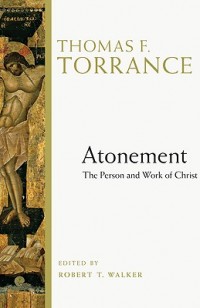
Good Friday bids us reflect on what T.F. Torrance calls, "the paradox of the cross." Following are comments from Torrance in  Atonement, the Person and Work of Christ : "In the cross of Christ we have humanity's final rejection of God, and in that cross we have God's final rejection of humanity's sin. But in the cross we have behind it all the holy will of God to take upon himself human sin in rejecting God, and to take upon himself his own rejection of humanity, so that he makes the cross the most positive act of the divine love. The cross not only opposes the human will to isolate itself from God and so to reject God, but so takes that rejection, that sinful refusal by humanity upon himself, that God directs toward humanity the amazing act of assumption in which, in pure grace, he gathers men and women in spite of their awful wickedness into fellowship with himself and refuses to let them go. "The cross means that God does not let any positive decision...

About that painfully embarrassing church

Image
This post was contributed by worship leader Mike Hale. Ever been embarrassed by your local church? Perhaps it’s small and unimpressive—a tiny group of common, broken people with limited means? The preacher does his/her best, but certainly isn’t a best-selling Christian author or a well-known televangelist. There’s no stellar music either—just a humble little worship service. Small, plain, common. And you wish it were somehow more “spiritually uplifting.” So why not stay home and avoid the whole messy business? Besides, you might even feel more satisfied and spiritually uplifted by downloading and privately listening to a nourishing sermon from Pastor Big Kahuna, the dynamic speaker at the regional mega-church down the road. Dr. Julie Canlis touches upon such notions in portions of a public lecture she gave in 2008 at Regent College in Vancouver ( click here to listen). She points to common confusion surrounding our expectations of “doing church.” She also describes historical e...

Eternal security?

A Surprising God reader sent this question: What does Trinitarian, Christ-centered theology say about eternal security ? Or asked another way, Can one lose one's salvation ? In answering, Trinitarian theology begins with the all-important question, Who is Jesus? The Bible answers that Jesus is the permanent union of God with all humanity. On the basis of this truth (this personal union ) we can answer our immediate question: Can one lose one's salvation? Unfortunately, salvation often is viewed as a transaction  with God -- a sort of bookkeeping exercise in which we give God our faith, and in exchange he grants us forgiveness and justification (salvation). But what the nature of the incarnate, crucified, risen and ascended Lord Jesus Christ tells us is that salvation is a relationship  -- it's about fellowship  not transaction. Moreover, we are shown that this relationship-fellowship between God and humankind has been established and occurs in and through Jesus h...

A Trinitarian view of spiritual formation

Image
Pastor, author and theologian Jule Canlis has written an essay titled, Calvin's Institutes: A Primer for Spiritual Formation ( click here to access the issue of Crux in which her essay appears). In her essay she notes that John Calvin emphasized the doctrine of the Trinity in his writings (including his Institutes ). Sadly, this emphasis was diminished by some of Calvin's followers as they further systematized Calvin's theology. One might say that some hyper-Calvinists "out-Calvined" Calvin! In the essay cited above, Canlis discusses Calvin's Trinitarian view on spiritual formation . Following is a representative quote. "Spiritual formation is all about entering this Father-Son relationship, about living out the truth of our adoption. It is the hard work of laying tasks aside in order to contemplate and receive the words, "This is my beloved Son, in whom I am well pleased" (Matthew 3:17). Only when we hear that word can our tasks have a...

Unity, diversity and “doing church”

This post was contributed by worship leader Mike Hale. We have been exploring Worshipping Trinity: Coming Back to the Heart of Worship , by Robin Parry, and last time we highlighted quotes in which the author describes our spirituality being shaped in community—especially in the dynamic of congregational worship. Below are more quotes about ‘doing church’ as the ‘living echo’ of the communion of the Father, Son and Holy Spirit. “In our lives together we are placed ‘in Christ’ by the Spirit and so relate to God the Father ‘in’ the Son, by the Spirit. We relate to Christ as the head of the body and we know the Spirit’s indwelling, empowering and gifting. Being church is about as Trinitarian as you can get!” (p. 56) “Many contemporary theologians see the community of the Trinity as a model for God’s community of the church. In God one finds mutual love between persons-in-relationship who recognize the equality and also value the differences of the ‘others’. Although human relationshi...

Jesus - our ransom

Many Christians will participate in a Last Supper memorial service on Maundy Thursday evening (April 1 this year).  At the original Supper midway through Holy Week, Jesus revealed himself clearly to his disciples as the prophesied Suffering Servant. This was not a new revelation, for Jesus had spoken of it earlier:  "The Son of Man did not come to be served, but to serve, and to give his life as a ransom for many" (Mat. 20:28). Now, at the Supper, Jesus enacts these words. First he washes the disciple's feet (John 13) - a vivid demonstration that he is the servant of all, and an invitation to his disciples to join him in that service to all humanity. Then during supper, Jesus takes common table elements (bread and wine) and uses them to represent the giving of his own human life to secure within himself as our representative and substitute, atonement with God. Concerning the bread, Jesus says, "Take and eat; this is my body..." Concerning the cup, he s...

Keeping it practical: It's like riding a bike?

Image
This post was contributed by worship leader Mike Hale. Last time we began exploring the book Worshipping Trinity: Coming Back to the Heart of Worship , by Robin Parry, and highlighted sections making plain that the primary emphasis in worship should not be on our own faith, decision or response, but rather on the perfect faith, decision and response of Jesus – the Son of God and Son of Man – and that the Holy Spirit enables us to share in the resurrected and ascended Son’s ongoing prayer and worship of the Father.  Below are additional quotes as to what that dynamic means for congregational worship. “Trinity should be related to our other beliefs like hydrogen is related to water.  Take the ‘H’ out of H2O and you no longer have water.  Take the Trinity out of Christian faith and practice and you no longer have Christian faith and practice.” (p. 5) “Christian theology is not an interesting exercise in abstract speculation but is intimately connected to Christian living and...

An incarnational view of justification by faith (whose faith justifies us?)

Image
Kudos to the  Experimental Theology  blog for highlighting the work of Douglas Campbell (pictured right) in The Deliverance of God . Though Campbell's book is long, dense and expensive, it's an important trinitarian analysis of Paul's doctrine of justification. Paul's thesis in Romans is summarized in 1:17: "For in the gospel a righteousness from God is revealed, a righteousness that is by faith from first to last, just as it is written, 'The righteous will live by faith.'"  Here Paul is quoting Habakkuk 2:4: "See, he is puffed up; his desires are not upright - but the righteous will live by his faith." Paul's point is often misunderstood by viewing the one referred to here as "the righteous" who will "live by faith" as you or me. That misunderstanding then leads to another, namely that we attain a state of being "righteous" through our faith in Jesus.This view leads on to a transactional theory of justif...

Keeping it practical: So, whose response is it?

Image
This post was contributed by worship leader Mike Hale. “I doubt that there is any other factor with undermines the mission and worship of the church more tragically than the widespread failure to appreciate the Trinitarian dynamic of worship….” Those are strong words!  They come from Alan J. Torrance in his endorsement of the book Worshipping Trinity:  Coming back to the heart of worship , by Robin Parry (2005 Paternoster Press).  Alan is Chair of Systematic Theology at St Mary’s College, University of St Andrews (and if his name sounds familiar, he is son of James Torrance and nephew of Thomas Torrance, each a highly respected minister, mentor and Trinitarian theologian). Certainly none of us want to unknowingly undermine mission and worship in our congregations, so what is this Trinitarian dynamic of worship, and how might we be failing to appreciate it?  We already believe in grace, so what’s the big concern? Robin Parry writes, “(Some) people think that although ...

An incarnational view of the atonement

Image
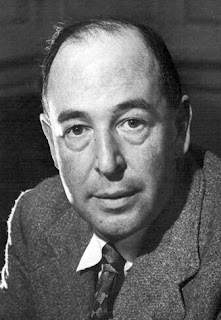
[This post was updated on 12/24/12] Christian theologies acknowledge that the atonement is accomplished through the person and work of Jesus Christ on our behalf. However, they differ in how they explain  how the atonement is accomplished. Trinitarian, incarnational theology emphasizes that the atonement is not accomplished merely by what Jesus has done for us, but who he is for us--the incarnate Son of God  who was born, lived, ministered, suffered, died, rose bodily, ascended bodily and now, remaining fully God and fully human ( 1Timothy 2:5 ), lives to intercede for us. This incarnational view of the atonement is explained by C. S. Lewis (pictured at right) in  Mere Christianity  (for Thomas Torrance's similar view of the atonement,  click here ): "We are told that Christ was killed for us, that His death has washed out our sins, and that by dying He disabled death itself.  That is the formula.  That is Christianity.  That...

The relation between Incarnation and Atonement

Image
The book "Atonement, the Person and Work of Christ" compiles the lectures of T.F. Torrance. In the introduction, the book's editor, Robert Walker, notes that the "linchpin" of Torrance's Trinitarian, incarnational theology is his understanding of the nature of Jesus Christ: "He who is the eternal Son of God, of one being with the Father, is he who is now also man and the fact that the same person who is fully and truly God is now fully and truly man, means that his person is and constitutes in itself...the union of God and humanity... In his one person, therefore, God and man, God and all humanity, are now irrevocably and eternally united. God and man can now no more be separated from one another in Christ than the person of Christ can be undone, or the incarnation, crucifixion and resurrection be reversed" (pp.xxxvii-xxxviii). Torrance understands this union of God and humankind in the person of Jesus to be   an "event, a becoming, the ac...

Mystery and Doxology

This post was contributed by worship leader Mike Hale. One of my favorite doxologies is Romans 11:33-36.  Those verses are also the lyrics to All Things by Joel Hendrickson, Steve Mills and Jeff Crumb (1992 Little Peach Music).  For years our praise band Higher Ground has often used this powerful song to place a rousing exclamation mark at the end of worship services. This doxology (from the Greek doxa – glory) captures the awe and wonder that thankful believers express when confronted with the “deep riches of the wisdom and knowledge of God” revealed in Christ. It also captures some of the mystery that is in the message. It touches upon several key elements in Christ-centered (Trinitarian) worship and theology – that all things begin and end with God – and that even though his thoughts and ways are completely beyond our ways of knowing, all things (everything in heaven and earth) are accomplished through him and to his glory.  And although God does not owe anyone anythi...

From the mouth of babes

Image
This post was contributed by worship leader Mike Hale. “I’m not really of much use to this church.  I’m only a volunteer worship leader, and not a full-time staff member.  My role here is so small, and besides, I really need to know a lot more about the theology of worship.” It was well over a dozen years ago, but still seems like yesterday.  I was feeling down and had begun to question my value as a volunteer member of a worship ministry team—wondering if those few hours of ministry each weekend were making any difference to anyone, and also wondering if I was really up to the task. Part of the problem was that for most of my adult life I’d been employed by a church, but severe budget cuts and large-scale layoffs had put an end to church employment, so it was easy to feel less a part of “real ministry.” Added to that, at the time I was stuck working as a temp on part-time jobs, and the kind of work wasn’t what I would have preferred as a career.  On the bright side,...

Concerning the sacraments

A trinitarian, incarnational understanding of the sacraments has significant implications for how we approach both baptism and the Lord's Supper. This issue is helpfully addressed by many trinitarian theologians. Here are two examples: Paul Fiddes writes in Participating in God: [We understand] the sacraments as pieces of earthly stuff that are meeting places with this [triune] God who exists in ecstatic movements of love. They are doors into the dance of perichoresis in God. [They are a means] of God’s gracious coming and dwelling with us. They are signs which enable us to participate in the drama of death and resurrection which is happening in the heart of God. We share in death as we share in the broken body of the bread and the extravagantly poured out wine, and as we are covered with a threat of hostile waters. We share in life as we come out from under the waters…to take our place in the new community of the body of Christ, and to be filled with the new wine of the Sp...

How do we worship in times of suffering?

Image
“Our small congregation has really been through a lot recently—several deaths, serious illnesses, unemployment, people moving away….we’ve been hit hard.” My friend was describing what he’s been facing as a ministry team volunteer, and I took no joy in letting him know he had also just described the exact condition of the small congregation I serve on the other side of town.  Over coffee we commiserated and talked about worship during times of trial and suffering.  Not meaning to sound trite—there seems to be more than enough suffering to go around. Events of last week brought more suffering into view.  I was assisting a local university’s Service Learning Program in Los Angeles consisting of six days of intensive, hands-on education at social service agencies of which just a partial listing includes an adult day care center for those suffering with Alzheimers, a global human rights agency fighting against genocides and caring for refugees, a social/psychiatric treatment c...

Question on John 3:36

Image
In John 3:36, we read this: Whoever believes in the Son has eternal life, but whoever rejects the Son will not see life, for God's wrath remains on them. How are we to read this statement? A lot depends on the lens through which we look. If it's a  theology of separation , this verse might be interpreted as indicating that God stands separate from and in wrath against all people *until* the moment they believe in Jesus, at which point God enters their lives (for the first time), stops being wrathful toward them, and grants them eternal life. But is that interpretation justified? We would say no, because it is inconsistent with what Scripture tells us about who God is, as revealed to us in the person of the incarnate Son of God, Jesus Christ. According to that revelation---reading this verse through that lens---rather than separate from sinners, God is  a friend of sinners;  God is Immanuel ---God with us and for us, the God of love who, in the person of Jesus, ...

Where is God when the world suffers?

The current tragedy in Haiti leads many to ask: Where is God when the world suffers?  For some, human suffering is evidence that there is no God. For others, it is evidence that God is either aloof (ignoring our suffering) or vengeful (causing it). The truth, revealed to us in the person of Jesus of Nazareth is this: God cares deeply, and is fully present with us in our suffering. We learn in Holy Scripture that God loved the world so much that he sent his one and only Son to become one of us in order suffer and die with us and for us (John 3:16). He did not come among us 2000 years ago, and he is not with us now, as a God of retribution who brings suffering upon his creation (John 3:17). No, the God we know in Jesus came and remains with us as Immanuel - God with us and for us - as one of us. God in the flesh (John 1:14). Through the Incarnation,  the Son of God, in the person of Jesus, took upon himself the fullness of our humanity - with all its sin and suffe...

Final quotes from "The God Who Believes"

Image
This post concludes a series reviewing Christian Kettler's book, The God Who Believes - Faith, Doubt, and the Vicarious Humanity of Christ .  For other posts in the series, click a number: 1 , 2 , 3 . We conclude now with several quotes from the book. "Jesus believes when I am unable to believe. Jesus acts when I am unable to act. Jesus loves when I am unable to love. Jesus forgives when I am unable to forgive. Jesus lives when I am dead in my sins. That is the power of truth become personal, the power of a vicarious life" (p. 102). "A vicarious life is a life that can be shared with others. The worship of the Father by the Son in the Spirit is but a part of a complete life of faith and obedience to the Father that in turn offers to us a share in this intimate communion between the Father by the Son in the Spirit. The Son indeed 'sanctifies' himself, sets himself apart for a holy use, for our sakes" [John 17:19 & Heb. 2:11] (p. 102). ...

2009—Nothing to brag about?

Image
This post was contributed by worship leader Mike Hale. Happy New Year!  However if you are anything like me and a lot of other folks, a big part of the celebration was shouting GOOD RIDDANCE to 2009!  What a year!  Almost nothing went according to plan, and there was plenty of what felt like failure, and not much to brag about.  And when enough things flop altogether or turn out dramatically different than you thought they would, at some point you not only feel a lack of power and wisdom—you wonder if you really know anything at all. So now its a new year and you definitely feel the need to look beyond yourself.  Help arrives with the inspired words of the Apostle Paul. Throughout the first two chapters of I Corinthians Paul describes God’s faithful love known in fellowship with the Son, Jesus Christ our Lord.   Paul proclaims the wisdom, power and grace that is Christ crucified—and says we share that wisdom and mind of Christ in our new life in Christ...