Posts

Life in the Trinity: Interpreting Scripture

Image
This post continues a series in the book   Life in the Trinity  by Donald Fairbairn. For other posts in the series, click a number:  1 ,  2 ,  3 ,  5 ,  6 ,  7 ,  8 . Fairbairn advocates the Christ-centered approach to biblical interpretation utilized by many of the church fathers. That approach begins with the  central message  of Scripture (what the fathers called  the rule of faith ) and then understands a specific text in that light. In this way, one starts with the broad context (story) of all Scripture and only then focuses on the narrow particulars. Unfortunately, we often do the reverse. We read a particular passage, then look only to its immediate (narrow) context to determine its meaning. When we do so, the broad context and thus the true meaning is often distorted or entirely missed. Fairbairn elaborates, pointing to the church father's understanding of the rule of faith: We [tend to] start with...

The people of God, the worshipping community, as ‘new creation in Christ’

This post was contributed by worship leader Mike Hale. While we are each created as unique individuals, we are also created for relationship with the Triune God, and with all creation—especially with others in the worshipping community. In his essay Baptism and the Christian Community , the late British theologian Colin Gunton described the worshipping community—the church—as being new creation in Christ by the Spirit. Gunton points to the relational aspect of the ever-changing church community, and says that to baptize a person is to bring that unique person into "….the sphere of the Spirit’s working, into the place where his or her gift may be exercised for the glory of God. The Spirit is the Spirit who creates the community of the Last Days, that worshiping body that is brought into the presence of the Father in the Son and by the Spirit." "Baptism, therefore, brings persons into relation with that community, so that they are now by means of a sacramental action ...

Life in the Trinity: What does that look like?

Image
This post continues a series in the book   Life in the Trinity  by Donald Fairbairn. For other posts in the series, click a number:  1 ,  2 ,  4 ,  5 ,  6 ,  7 ,  8 . Fairbairn refers to the doctrine of the Trinity as "the gateway to understanding Christian life" (p50).  Last time , we noted Fairbairn's understanding of the Trinity: God, who is three (tri-personal), is one in substance ("God-ness") and fellowship (triune communion) (p55). But what does this mean for our lives? According to Fairbairn, just this: though we do not and cannot share in God's substance,  God created us to share in his triune fellowship (p56). Indeed, this sharing in the love and life of the Trinity, which the Patristic fathers referred to as theosis,  is the essence of human life.   He comments: ...We are meant to remain creatures and thus remain lower than God but at the same time to share in the fellowship and love that ha...

Life in the Trinity: God's threeness and oneness

Image
This post continues a series in the book   Life in the Trinity  by Donald Fairbairn. For other posts in the series, click a number:  1 ,  3 ,  4 ,  5 ,  6 ,  7 ,  8 . In chapter 3, Fairbairn addresses differing views of the Trinity. He notes that, "the Western church has emphasized the oneness of God..."  whereas, "the Eastern church has stressed God's threeness." Why the difference?  Because, "whether one starts with the one or the three depends on how one interprets the flow of biblical revelation about the Trinity" (p39). The Old Testament emphasizes God's oneness (e.g. Isaiah 43-45 and Deuteronomy 6:4-9 ). Then the New Testament testifies to this one God's threeness (the Father is God, the Son is God, and the Holy Spirit is God). Both ideas are true and essential, but a problem arises when they are reduced to a mechanistic formula. Instead, the Bible speaks of God's oneness and threeness in a  relational con...

A new Hymn to the Trinity – and our place in the life of the Son

Image
This post was contributed by worship leader Mike Hale. On this blog we typically focus on the larger themes and theology of Trinitarian life and worship rather than on specific worship songs. But here’s a new hymn about that Divine and human reality. In searching for Trinitarian worship music, Jonathan Stepp decided to write a new song – Hymn to the Trinity . Surprising perhaps, since Jonathan isn’t a song writer, but then again considering the theme of the hymn, perhaps not so surprising, since Jonathan is a church pastor in Nashville TN who for years has poured himself into preaching and writing about Trinitarian life—the good news that the Son of God lives in humanity and shares with us the relationship he has with God the Father and the Holy Spirit. Jonathan often refers to this as “the adopted life” – the life in which we are all participants now that the Trinity and Humanity are together in Jesus. Jonathan (along with Tim Brassell) developed The Adopted Life website and news...

Life in the Trinity: Our adoption

Image
This post begins a series in the book   Life in the Trinity,  an introduction to theology with the help of the church fathers  by Donald Fairbairn. For other posts in the series, click a number: 2 , 3 , 4 , 5 , 6 , 7 , 8 . Dr. Fairbairn presents an important and helpful overview of incarnational Trinitarian (Christ-centered) theology. A key feature is following the patristic fathers in emphasizing the Biblical doctrine of adoption.  This emphasis contrasts with Western Protestant theologies that tend to follow the reformers in emphasizing justification. In this context, adoption (and its correlate, sonship ) tends to be relegated to a believer's forensic (legal) standing before God. Donald Fairbairn, professor of early Christianity at Gordon- Conwell Theological Seminary However, in the East (and now in Fairbairn's book), adoption is placed front and center where it is viewed as fundamentally  relational : " a sharing by grace in the f...

Mission or Mission?

Image
Edwin Searcy It seems that the Holy Spirit is transforming the church's understanding of mission. In Mission or Mission (an article on page 3 of the Sept/Dec 2003 issue of  The Gospel and our Culture ), Edwin Searcy (congregational minister at  University Hill Congregation , United Church of Canada, Vancouver, B.C.) describes how his understanding of mission has changed: For most of my life mission has referred to a journey with a purpose, undertaken by an individual or a group. As a teen I watched every mission to the moon with fascination. Growing up in the United Church [of Canada] I learned that the Mission and Service Fund was our calling to "live love." As a minister I worked hard with congregations to craft mission statements that gave direction to our objectives and goals. Mission had to do with us, with what we needed to do, because, as we said to ourselves, "God has no other hands but ours." But I am undergoing a conversion in my life because of a ...

The vicarious humanity of Jesus

Image
David Torrance In a recent essay David Torrance notes that a knowledge of the vicarious humanity of Jesus , "is crucial to our understanding of Christ and of Scripture" (p.1). He shows that the eternal Son of God, through whom all things were created and have their being, became human in the person of Jesus Christ. In his humanity (while remaining divine), Jesus is the representative and substitute for all humanity. Thus what happened (and continues to happen) to Jesus, applies to us all. This stunning truth tells us that our salvation is not merely something that Jesus did for us, but who Jesus is for us, as one of us (the Incarnation continues!). Our salvation is thus far more than a legal (forensic) transaction that was accomplished by Jesus's death to pay for our sin. His death did accomplish that necessary payment (praise God!), however, it is the total scope of Jesus' continuing vicarious humanity that accomplishes and secures our salvation. Our salva...

“He who sings prays twice.”

This post was contributed by worship leader Mike Hale. Some will recognize that statement as a reminder from St. Augustine of the rich blessing and importance of singing to God. Or in light of a Christ-centered incarnational theology, we might even say the blessing and importance of singing with God—being included in the prayers and praises of the risen and ascended Jesus in the heavenlies. Yet when it comes to congregational singing, some folks are (or at least seem to be) reluctant to participate. My old friend joked recently that he doesn’t have ‘the gift of worship’—said he’s ‘worship challenged.’ Well, at least he’s joking. He’s fully supportive of church worship, but when the music starts, he’s just not the most boisterous worshipper among us. We get it. I’m not personally a fan of worship leaders pleading with those in attendance in an attempt to coerce more participation, more volume, more smiles, more intensity, more this and more that, during a worship service. (For one...

A Trinitarian view of the mission of God

Image
We are seeing in many places a resurgence of interest in the mission of God. Wonderful! But, as with all things pertaining to God, the mission of God is seen in the fullness of its grace and truth when viewed through the lens of a Trinitarian, incarnational theology. I'm impressed with how Mike King and Scot McKnight do this in a recent  Slant 33 blog post ( click here to read the full post). Here is part of Mike's comment: Mike King What is God’s mission? The term missio Dei (mission of God) implies that God has a purposeful plan. Karl Barth emphasized the reality that God is at work, actio dei (the action of God). We often think of mission when we discuss the mission and activity of God, which, unfortunately, is so enmeshed in a Western mindset of saving the heathen...  We must recover the Eastern Church Trinitarian emphasis on God’s radical communality and the movement toward restoration and shalom. We are being invited to participate in God’s mission and activity th...

A Trinitarian understanding of the Atonement

In Faith Seeking Understanding , Daniel Migliore summarizes and critiques the three primary theories of the Atonement in classical Western theology. Why more than one? Largely because the New Testament uses several metaphors to describe the Atonement, and each theory tends to focus on one, sometimes at the expense of the others. Here is a summary of each theory: 1. Christ the Victor theory , which develops the NT's battle metaphor (e.g. Col 2:15 ). Migliore comments: According to this view, the work of atonement is a dramatic struggle between God and the forces of evil in the world....Under the veil of his humanity, Christ triumphs over the demons, the devil, and all the principalities and powers that hold human beings captive. By his cross and resurrection, Christ decisively defeats these powers an thus frees their captives (pp. 182-3).  2. Anselm's Satisfaction theory , which arose in the medieval period. It emphasizes scriptures that suggest that humankind is redee...

Victory, let’s hear It! V-I-C-T-O-R-Y! But what about worship with the ‘suffering servant’?

This post was contributed by worship leader Mike Hale. “Season’s Greetings Dear Friends and Family. Wanted to let you know we won the Mega Millions Lottery and are now millionaires many time over!” Sure, Christmas and the end of the year is a great time to catch up with friends and family from around the globe, but have you ever felt a wee bit unsettled upon receiving a letter mentioning nothing but the greatest accomplishments, glories and good fortune? You know, a letter that goes something like this…. “What an AWESOME year! Wilbur was promoted to Manager with a huge raise, but then accepted an offer to be Vice President at Acme Inc. with a HUMONGOUS signing bonus, and a company car! (Starts right after we get back from our one month European vacation.) Sally won the Miss America contest and will receive a full college scholarship, and next month she leaves on her book signing tour, and her latest recording will be released then too!” “Our quadruplets are the youngest players an...

A Trinitarian doctrine of God's attributes

Image
This is the concluding post in a series reviewing Daniel Migliore's book,  Faith Seeking Understanding, An Introduction to Christian Theology . For other posts in this series, click a number:  1 , 2 , 3 , 4 . God the Father   (Pompeo Girolamo Batoni, 1779) In this concluding post, we look at Migliore's Trinitarian perspective on  God's attributes. He  takes exception to what he sees as a common error in many contemporary systematic theologies, namely grounding the doctrine of God's attributes not in the revelation through Jesus of God's attributes as a triune communion of divine persons, but in speculative, metaphysical, philosophical concepts that dominated the Western theology of the church in the middle ages. As examples of this error, Migliore cites Augustine's view of God's impassibility (that God does not suffer emotionally). Augustine taught that, "God does not truly grieve over the suffering of the world." He then cites Anselm ...

A tale of two Christmas pageants: Bethlehem’s angels and General Washington’s weary soldiers

“Wow! Someday I want to be in that Christmas pageant too! I wanna play the part of Joseph, or one of those kings bearing gifts, or a shepherd hearing from angels!” That's what I said as a small child thrilled with the wonderful sights and sounds of the big Christmas pageant at our church school. But it didn't turn out quite like I had wanted. Each year those main character parts were handed out to others, and my role was to simply sing in the children’s choir—a group of small white-shirted messengers of God, proclaiming the birth of a Savior named Jesus. Now don’t get me wrong, I’ve always loved singing, but wouldn’t it have been neat to wear a shiny crown and a colorful robe as one of the wise men from the East bearing gifts for the newborn King? Finally one year I landed a speaking part (seven whole words!), but instead of the regular pageant with angels and wise men and shepherds, this time it was for a most unusual little production. We enacted parts of the true story ...

The Trinity: the grammar of divine love

This post continues a series reviewing Daniel Migliore's book,  Faith Seeking Understanding, An Introduction to Christian Theology . For other posts in this series, click a number:  1 ,  2 ,  3 ,  5 . Migliore speaks of trinitarian faith as giving us a "grammar of wondrous divine love that freely gives of itself to others and creates community, mutuality, and shared life" (p76). He summarizes this grammar with three statements (what follows compiles quotes from pages 76-82): 1. To confess that God is triune is to affirm that the eternal life of God is personal life in relationship . In God's eternal being there is movement, life, personal relationship and the giving and receiving of love.  God is one, but the unity of God is a living unity - a koinonia of persons in love. The three persons of the Trinity have their personal identity in relationship. In this oneness, there is differentiation and otherness, for relationship presupposes otherness...

Advent - the creative act of the Spirit in Mary and the Son – the beginning of the future

This post was contributed by worship leader Mike Hale. According to Matthew and Luke, and as testified in the creeds of the Church, it is in relation to Mary, the mother of Jesus, that the Holy Spirit begins to be revealed in his New Testament fullness. Tom Smail writes in The Giving Gift: The Holy Spirit in Person , Of course when the Creed brings the Holy Spirit and Mary together, the subject of the sentence is not either of them, but ‘Jesus Christ, his only Son our Lord, who was conceived by the Holy Spirit and born of the virgin Mary’. If the Spirit works revealingly in Mary, it is not for her sake or yet for his own, but so that Jesus Christ can be formed in her and born from her. Mary’s response is not to the Holy Spirit as such but to the promise about Jesus that is made to her (Luke 2:26-38). The Christological concentration is central from the start…. (Page 22). To paraphrase Smail, we can think of Mary as the model charismatic—and the primary gift the Spirit gave to her w...

Christmas celebrates our redemption

Image
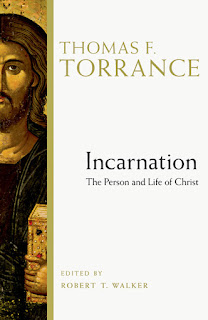
[Updated 12/25/2016] At Christmas, we celebrate the Incarnation---the stunning miracle by which the eternal Son of God, while not ceasing to be fully God, became fully human in the person of Jesus Christ. As noted by Thomas F. (T.F.) Torrance in the book  Incarnation, the Person and Life of Christ , the Incarnation is a "redeeming event" by which the Son of God assumed "our unholy humanity" with the result being that, "his purity wipes away our impurity, his holiness covers our corruption" (p82). This association of the Incarnation with our redemption is often overlooked at Christmas; yet it is central to the Christmas story. As T.F. notes, through the Incarnation, God, in the person of Jesus, permanently united our human nature with his divine nature. The result of this union (which includes us in Jesus' birth, life, death, resurrection and ascension), is that humanity is given to share in the righteousness of Jesus: "Not only the ne...

A gospel-centered doctrine of the Trinity

Image
This post continues a series reviewing Daniel Migliore's book,  Faith Seeking Understanding, An Introduction to Christian Theology . For other posts in this series, click a number:  1 ,  2 ,  4 ,  5 . "The  Trinity"  by Andrei  Rublev, c. 1401 The task of Christian theology is to clarify an understanding of God that is appropriate to and fully congruent with the message of the gospel of Jesus Christ. According to Daniel Migliore in  Faith Seeking Understanding , that is precisely what the historic doctrine of the Trinity accomplishes: The doctrine of the Trinity...is the product of the meditation and reflection of the church on the gospel message over many centuries. In other words, the starting point or root of trinitarian faith is the good news of the love of God in Christ that continues to work in the world by the Holy Spirit. The doctrine of the Trinity is the church's effort to give coherent expression to this mystery ...