Posts

Does God care? (divine impassibility)
Image
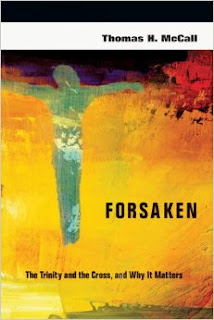
This post continues the series exploring the book  Forsaken (The Trinity and the Cross, and Why it Matters)  by  Tom McCall . For other posts in the series, click a number:  1 ,  2 ,  3 ,  4 ,  6 ,  7 ,  8 . An accurate discussion concerning God's love and wrath must account for the full doctrine of God, which includes the topics of  divine impassibility  and  divine simplicity.  In this post we'll look at what McCall has to say about the first. Does God suffer with those who suffer, or is he the "Unmoved Mover"? According to McCall, some misunderstand divine impassibility to mean that God, by definition, is without emotions ("affections"). From this perspective, God is seen to be "cold and detached, the 'Unmoved Mover'" (p64). Understandably, many modern Christians reject this viewpoint, instead embracing a "revisionist viewpoint," which states that... God is "relational" and "dynamic"... a God who is...

Understanding God's wrath and love

Image
This post continues the series exploring the book  Forsaken (The Trinity and the Cross, and Why it Matters)  by  Tom McCall . For other posts in the series, click a number:  1 ,  2 ,  3 ,  5 ,  6 ,  7 ,  8 . We'll now look at McCall's discussion of God's wrath in which he asks the question, "Did the death of Jesus make it possible for God to love us?" (p49). His answer is no, because the question presupposes the mistaken belief that God did not love us before Jesus died for us on the cross. The fact of the matter, revealed to us by Jesus, is that God has always loved us. And it was out of love and for love that God the Father sent his Son to become one of us, and as our representative to die and rise for us in order that we might enjoy full fellowship with God forever. God's wrath But what about the many scriptures that speak of God's wrath toward sinners? How do we reconcile God's wrath with his love? Does God have a "dar...

Jesus' cry of abandonment and Psalm 22

Image
This post continues the series exploring the book  Forsaken (The Trinity and the Cross, and Why it Matters)  by  Tom McCall . For other posts in the series, click a number:  1 ,  2 ,  4 ,  5 ,  6 ,  7 ,  8 . Last time  we looked at two arguments that McCall uses to defend the view that God the Father did NOT  abandon his Son at the cross. Now we'll look at his third argument, which has to do with understanding that Jesus' cry of abandonment ( My God, my God, why have you forsaken me? ) should be understood as referring to the full message of Psalm 22, not just the one sentence. In support of this view, McCall cites Matthew's and Mark's accounts. Clearly, both intend that their readers understand that the events at the cross echo the entire message of Psalm 22. For example, McCall notes that both Mat 27:27-31, 38-44 and Mark 15: 16-20, 25-32 tell of Jesus being mocked--a clear echo of Psa 22:6-8: 6 But I am a wor...

Does God like you?

I heard a sermon recently on the topic of anger. The preacher said something quite profound: It has taken me many years to understand something that has melted away layers of pent-up anger: God likes me! Has the preacher fallen prey to pie-in-the-sky, wishful thinking? Is he right - does God actually like him? Here's another question - does God like you? The answer is of great importance. The preacher was relating his personal struggle with a performance-based religion that says God relates to us based on how well we are (or are not) doing. This legalistic view suggests that God is never quite pleased with us - even when we are on our best behavior. This is a common view of God as our judge (and a harsh one at that) - a God who is a sort of cosmic Santa Claus, "making a list and checking it twice, gonna find out who's naughty or nice." One could hardly view this sort of God as liking us . However, the God revealed to us in the person and work of Jesus Chri...

Trinitarian life

As important as it is to understand trinitarian theology (orthodoxy), it is even more important to live the trinitarian life (orthopraxis). Note the words of Catherine Mower LaCugna in  God for Us: The Trinity and Christian Life : The doctrine of the Trinity is orthodoxy, right perception of God, and it calls for orthopraxis, right response to the glory of God. Jesus Christ and the Spirit are the standard for both orthodoxy and orthopraxis. Jesus Christ’s life and death, words and deeds, knowledge and love of God are normative for Christians. The power of God’s Spirit to convert the hardened heart and make the blind see is essential both for right worship, right knowledge, and right love....  The doctrine [of the Trinity] succeeds when it illuminates God’s nearness to us in Christ and the Spirit. But it fails if the divine persons are imprisoned in an intradivine realm, or if the doctrine of the Trinity is relegated to a purely formal place in speculative theology. I...

Did God forsake Jesus at the cross?

Image
This post continues the series exploring the book  Forsaken (The Trinity and the Cross, and Why it Matters)  by  Tom McCall . For other posts in the series, click a number:  1 ,  3 ,  4 ,  5 ,  6 ,  7 ,  8 . Last time  we saw how McCall shows that Jesus' cry of dereliction on the cross ("my God, my God, why have you forsaken me"), cannot be taken as indicating that the Father separated himself from his Son. McCall uses several arguments to debunk this wrong-headed (though popular) notion. In this post we'll look at two. First, McCall argues on the basis of God's own essential (and inseparable) triune nature. He quotes Bruce D. Marshall: God the Son can be truly Fatherless only if God the Father has genuinely given up whatever is necessary for his paternal relationship with his Son... The person of the Father is inseparable from the act of generation by which he eternally brings forth the Son. Without this act of genera...

Understanding God in the Old Testament

This blog often receives questions about Old Testament (OT) passages that seem to portray God in a way quite different than he is portrayed in the New Testament. In exegeting such passages, it is important to remember that OT references to God are not the full revelation of his being. That revelation comes only in the person and work of Jesus Christ. However, God did reveal something of his essential nature to Israel - a revelation recorded in the OT. Notable is God's self-disclosure in Ex 34:1-35. Let's note some key points. Having broken the stone tablets containing the Decalogue, Moses is directed by the LORD to make replacement tablets, so that God might restore his people to their covenant commitments, and thus to fellowship with him. Notice Ex 34:1-9: 1 The LORD said to Moses, "Chisel out two stone tablets like the first ones, and I will write on them the words that were on the first tablets, which you broke. 2 Be ready in the morning, and then come up on Mount...

My God, my God, why have you forsaken me?

Image
This post begins a series exploring the book  Forsaken (The Trinity and the Cross, and Why it Matters)  by  Thomas McCall . For other posts in the series, click a number:  2 ,  3 ,  4 ,  5 ,  6 ,  7 ,  8 . For a related post that looks at this topic through the eyes of multiple theologians, click here . Several years ago, I took Dr. McCall's class on the doctrine of God at Trinity Evangelical Divinity School. The primary focus was the doctrine of the Trinity, and a primary text was   The Christian Doctrine of God (One Being, Three Persons)   by Thomas F. Torrance. The class included thought-provoking discussions concerning various (and sometimes competing) theological perspectives on the Trinity. These discussions reinforced in my mind the importance of understanding the historic (Nicaean) roots of the Trinity doctrine - roots reflected in the aforementioned book and unpacked by Torrance in  The Trinitarian Faith  ...

Why study theology?

Image
Some see theology as an unnecessary, "high brow" distraction. They ask, Why do I need to study theology? The video embedded below (titled Theology Matters ) offers a helpful answer (you can also view the video at  http://youtu.be/A2DUKPUKgAI ).

knowing Jesus, and knowing who we are

When Jesus had spoken these words, he lifted up his eyes to heaven and said, “Father, the hour has come; glorify thy Son that the Son may glorify thee, since thou has given him power over all flesh, to give eternal life to all who thou has given him. And this is eternal life, that they know thee the only true God, and Jesus who thou has sent.” (John 17:1-3) Glorified how? What came next was betrayal, arrest, suffering, crucifixion and death. There would be no resurrection, ascension or Pentecost without the cross. But we see in confidence that what Jesus began he completed, and He is the Author of our Salvation, and the Captain and Perfecter of faith. Wise teachers remind us that Jesus is the reason humanity exists—not the other way around—and that we only find out who we ourselves are after first discovering who Jesus is, and how he glorified (and continues to glorify) the Father. His suffering and death is tied to ours, and his joy and new life becomes ours, as we too learn to glo...

The message of Holy Week and Easter: In Christ we are healed

Image
Holy Week and Easter Sunday are powerful reminders that our humanity is healed in the person of Christ who, through the Incarnation, is fully God and fully human. Note James B. (J.B.) Torrance's comment in Worship, Community and the Triune God of Grace:  We are not just healed through Christ, because of the work of Christ, but in and through Christ. Person and work must not be separated. That is why [the church] Fathers did not hesitate to say, as Edward Irving, the Scottish theologian in the early nineteenth century and Karl Barth in our own times have said, that Christ assumed "fallen humanity" (i.e., our humanity) that it might be turned back to God, in him by his sinless life in the Spirit, and through him in us. (p. 53)  What is at work in all of Jesus' life (including his death and resurrection) is a two-fold movement (relationship):  God-humanward and human-Godward, which constitutes the atonement (the "at-one-ment", or reconciliation) of God and hum...

Bonhoeffer and Barth on discipleship

Image
Dietrich Bonhoeffer I'm reading Eric Metaxas' biography of Dietrich Bonhoeffer ( Bonhoeffer: Pastor, Martyr, Prophet, Spy: A Righteous Gentile Vs. The Third Reich ). It's a moving, thought-provoking story of a young man who came to view Holy Scripture, Christianity and his own life and calling to ministry through the lens of a Trinitarian, incarnational theology. This perspective was formed by encounters through many people (both theologians and pastors), including Trinitarian (dialectical) theologian Karl Barth. One of Bonhoeffer's principal contributions was working out the application of Trinitarian theology to the challenges of real life. The challenges he faced were those encountered in Germany leading up to and through World War II. His beloved country, including his beloved German Lutheran Church came under the evil influence of Hitler and his Nazi regime. Bonhoeffer was challenged to live out his theology in the midst of this terrible evil. Thus his theol...

The role of ordained clergy

In 1955, Thomas F. Torrance wrote Royal Priesthood, a theology of ordained ministry . His purpose was to help bring about reconciliation between the Church of England and the Church of Scotland that hold differing views on the doctrine of the priesthood (ordained clergy). T.F. sought to contribute... "the Biblical and Patristic approach to the understanding of the evangelical and catholic ministry of the Church as a Royal Priesthood, participating by way of service in the Priesthood of the Lord Jesus Christ, who is the one Mediator between God and mankind (1 Tim 2.5) (p ix). T.F. notes that, contrary to some doctrines of the priesthood, ordained clergy do not stand at the center of Christian worship - that role is reserved for Christ, "the real Celebrant - so that like John the Baptist the priest must retreat before the presence of Christ" 'He must increase, but I must decrease' (John 3.30)" (p xi). T.F. laments what he refers to as the "sacerd...

The Atonement is not just about the cross

Unfortunately, some theories of the Atonement focus almost exclusively on the cross. These theories see the Atonement as being about Jesus dying on our behalf to provide complete satisfaction for the dishonor done to God the Father by our sin. Viewed from this perspective, the Atonement is about justice, and it principal gift is forgiveness .  However, such theories fall far short of the biblical revelation. Note the Apostle Paul's words:  If Christ has not been raised, your faith is futile and you are still in your sins. (1Cor 15:17)  Commenting on this verse in The Soul of Ministry , Ray Anderson says this:  It is the resurrection of Jesus, not just his death on the cross, that completed the Atonement... It is not just sin that needs to be forgiven, but death that needs to be overcome.... The great human dilemma is death, not merely sin" (p98).  Viewed from the perspective of the full testimony of Scripture, the Aton...

Jesus is true humanity

What does it mean to be human? There is but one complete and final answer, and it is found in the humanity Jesus. Trinitarian theologian Karl Barth put it this way: "As the man Jesus is himself the revealing Word of God, he is the source of our knowledge of the nature of man as created by God." In Jesus, who is fully divine yet fully human, we find our true human identity and nature. Barth put it succinctly: "All study and knowledge of human beings is grounded in the fact that one man among all others is the man Jesus." Jesus is the only human who faithfully and perfectly represents what God, the Creator, wishes for the human person, created in his image, to be. And, by grace, through his Spirit poured out on all flesh, Jesus is sharing with us his true humanity, re-creating us in his image as he does so. And so it is vital that we understand and embrace the humanity of Jesus. This is not a humanity that Jesus once  possessed, then shed. His ...

Ash Wednesday

Image
I'm writing this on Ash Wednesday - the first day of Lent. I'm reminded today of Job's words to God: "I had heard of you by the hearing of the ear, but now my eye sees you; therefore I despise myself, and repent in dust and ashes" (Job 42: 5-6, NRSV). Job's experience is typical - when God reveals himself to a person, a crisis inevitably results. Why? Because to be shown God in the fullness of his goodness and grace is to come to the crisis of decision - will we embrace the revelation and be transformed (as was Job), or will we turn away in self-imposed ignorance? In this season of Lent - a time of reflection leading up to Easter Sunday - may we receive with open and tender hearts God's revelation to us of himself. Of course, that revelation comes not merely as a book, a set of doctrines, or a theological treatise. Rather it comes to us as a living person - the incarnate Son of God, Jesus Christ. Indeed, in the person of Jesus, God is revealed to be ...

Presenting the Gospel evangelically

Unfortunately, the Gospel is often presented as though God keeps himself separate from us, waiting for our expressions of faith and repentance before he will move to forgive, accept and thus make us his children. However, the stunning truth of the Gospel is that God, through Jesus' continuing vicarious humanity,  already has reconciled himself to all humanity. Because of who Jesus is and what he has done (and does), God accepts, loves and forgives everyone. Therefore the Gospel is the truly good news of an accomplished fact. This being so, Trinitarian, Christ-centered presentations of the Gospel urge people to believe and then live into what is already true, rather than offering them a transaction by which God will act to forgive them if, first, they offer God their faith and repentance. In The Mediation of Christ , Thomas F. Torrance notes that the Gospel, when preached and taught in this truly evangelical way, will be presented something like this: God lo...

The practice of Trinitarian theology: place-sharing

Image
This blog often discusses theological theory . In doing so, there is the risk of succumbing to "ivory tower" thinking that is disconnected from real life. However, for me, Trinitarian, incarnational theology rings true precisely because of its inseparable connection to real life and ministry . This connection is often noted and explored in the discussions that are a key part of the online course I teach at Grace Communion Seminary  in Trinitarian Youth Ministry . My students wrestle together with the teachings of Trinitarian theologians Andrew Root, Dietrich Bonhoeffer, Thomas F. Torrance and others. What they find is not "ivory tower" stuff that makes no difference in real life, but stunning truth that speaks directly to real life and ministry. Finding this connection is not forced, for the very basis of Trinitarian, incarnational theology is the reality of the presence and ministry of the incarnate Son of God in our world through the Holy Spirit. This ...