Posts

Is obedience sanctification's cause?

Image
[Updated on 1/19/2017] Several years ago, I attended a seminar with a well-known Christian author who for many years had written about sanctification. He shocked us by proclaiming that, "the books of mine that you own should be discarded--I have discovered that they do not work!" What his books and small group curricula had advocated was a strategy for ordering one's life in obedience to God. Why doesn't that work? The author answered: "I learned that no one overcomes a 'besetting sin' until they realize that they are forgiven already." What he came to understand is that obedience is the  fruit of sanctification, not its  cause . God sanctifies us by his grace, not by our efforts .  Scrovegni's "Expulsion of the Money-changers" (public domain via Wikimedia Commons) This is a vital truth to understand (and to live by), for it is essential to the gospel of God's grace, which proclaims that every aspect of our salvation...

The message of Christmas

I'm repeating here a post from 2010 concerning the message of Christmas. May you and yours celebrate this season with joy and in good health. At Christmas, we celebrate the Incarnation - the stunning miracle by which the eternal Son of God, while not ceasing to be fully God, became fully human in the person of Jesus Christ. As noted by T.F. Torrance in  Incarnation, the person and life of Christ , the Incarnation is a "redeeming event" by which the Son of God assumed "our unholy humanity" with the result being that, "his purity wipes away our impurity, his holiness covers our corruption" (p82). This association of the Incarnation with our redemption is often overlooked at Christmas; yet it is central to the Christmas story. As T.F. notes, through the Incarnation, God, in the person of Jesus, permanently united our human nature with his divine nature. The result of this union (which includes us in Jesus' birth, life, death, resurrection and ...

Does everyone have the Holy Spirit?

Image
[updated 5/22/2019] A key understanding of incarnational Trinitarian theology is that God has included everyone in his love and life through the incarnation, life, death, resurrection and ascension of Jesus and through what Jesus did at Pentecost in pouring out the Holy Spirit on all humanity. Are we then saying that all people have the Holy Spirit ? There are several factors at work that I'll briefly address here. St. Peter's Holy Spirit window (public domain via Wikimedia Commons) First, there is the nature and the timing of God’s call. Paul writes in Romans 8:30 that, "...those he [God] predestined, he also called; those he called, he also justified; those he justified, he also glorified." Here Paul addresses the broad sweep of salvation history in which he sees all humanity as included in Christ---in what he accomplished for all through his life, death, resurrection and ascension. This is the objective  reality of salvation history located in th...

A holistic view of salvation

Image
[updated 10/10/22] At times, Christians reduce the idea of salvation to less than its biblical fullness. Unfortunately, this strips salvation of some of its richness and leads to confusion concerning its nature and scope. However, when viewed through the lens of incarnational (Christ-centered) Trinitarian theology, the fullness of our salvation in Jesus Christ comes into focus as represented in the diagram below, which likens salvation to a stunningly beautiful gem with multiple facets. This diagram reminds us that salvation (represented by the full gem) is the sum total of its individual parts (represented by the gem's facets). This holistic view of salvation seeks to be faithful to Christ, who through his incarnation, life, death, resurrection, ascension and the sending of the Holy Spirit, is the Source of our salvation.  Note that the diagram does not show all of salvation's facets, but lists several, including justification, redemption, adoption, sanctification an...

The Upper Story and the Lower Story

Image
A key aspect of incarnational Trinitarian theology is understanding how Scripture distinguishes between what we might call the Upper   Story  and the Lower Story . The Upper Story  is reality as viewed from God's objective perspective, and the Lower Story  is reality as viewed from our subjective perspective. Sometimes these two are referred to as universal  and personal with the former pertaining to what Scripture refers to as kairos  time and the latter as kronos  time. Here is a diagram that integrates these concepts: These concepts and their interrelationships flow from a Hebraic worldview (the frame of reference, which dominates Holy Scripture) with the diagram illustrating the reality that what God has done for us in Christ, " from the foundation of the world " is the objective Upper Story  reality. God's reality then becomes our personal/subjective Lower Story  reality when we believe (and thus, in faith, receive) both who God in...

The curative power of a good relationship

Last time we saw that Trinitarian theology shows how pastoral counselors participate in the ongoing counseling ministry of Jesus, the wonderful counselor . It's important to note that Jesus does not "fax in" his counsel from afar. Rather, through his continuing incarnation (by which he is united to all humanity), in the power of the Holy Spirit, Jesus Christ is God with us ( Emmanuel ). His counseling ministry is thus fundamentally  incarnational -- a "with us and for us" ministry of presence . Though most pastoral counselors utilize a particular counseling (therapeutic) mode (and there are many), research indicates that the mode itself accounts only for only about 15% of the efficacy (curative power) of the counseling. Of greater importance is the counseling relationship . Counselees most frequently experience positive counseling outcomes when their counselor is compassionate, empathetic, attentive and thus nurturing. The counselor's caring presenc...

Trinitarian theology and pastoral counseling

Image
One of the ways pastors and other ministers share in the mission of our triune God, is by joining with Jesus Christ, the wonderful counselor , in his ministry of counseling, in the power of the Holy Spirit, through the church. That being so, we appropriately ask, How does Trinitarian, incarnational theology inform pastoral counseling? I've been thinking about this for some time, studying Holy Scripture and books like Theology & Pastoral Counseling (a new interdisciplinary approach) by Deborah van Deusen Hunsinger, who teaches pastoral counseling at Princeton Theological Seminary. She helpfully describes an interdisciplinary approach to pastoral counseling, which draws upon the Trinitarian theology of Karl Barth and psychodynamic theories of psychology. I find her approach both sound and useful. According to Hunsinger, "Pastoral counseling, as a ministry of the church, is essentially interdisciplinary. Becoming equipped for this ministry requires both psychologic...

The inclusion of all humanity in Christ

Image
As we look through the lens of a Trinitarian, incarnational theology, the central truth of the gospel comes into clear focus, declaring that God the Father, through the life, death, resurrection and ascension of his incarnate Son, Jesus Christ, has reconciled the world (including all humanity) to himself (see 2 Cor. 5:19 ). In Christ, through the Holy Spirit, all people are forgiven, accepted and included in God's triune love and life. This central truth is unpacked by Baxter Kruger in The Shack Revisited: There Is More Going On Here than You Ever Dared to Dream . I recommend it highly. In the book's appendix, Baxter offers quotes that speak to a Trinitarian, incarnational understanding of the gospel. Here are a few of them, and for others, see the relevant quotes page on this blog. From Paul S. Minear, Images of the Church in the New Testament: In the context of his statement [ 2 Cor. 5:17 ] Paul located this transition from the old to the new at a single point: the...

Ethics and dualism

Many hold a two-spheres view of reality, with one sphere that is separate from God (the secular world) and one that is united with God (the sacred world). This dualistic worldview colors everything else, including one's perspective on ethics. According to Dietrich Bonhoeffer in his book Ethics , a two-spheres worldview runs contrary to the core message of the gospel, which declares that the whole world has been taken up in Jesus Christ through the Holy Spirit and there reconciled to the Father. Bonhoeffer asserts that when Christians embrace a dualistic approach to ethics (or call it Christian living), they place themselves in an "irreconcilable struggle against the world," which keeps them from participating actively in Jesus' redemptive activity in the world. He continues: Ethical thinking in terms of spheres...is invalidated by faith in the revelation of the ultimate reality in Jesus Christ.... There is no place to which the Christian can withdraw from the ...

Read the Bible with Jesus

Image
Christians highly value the Bible. That is as it should be. But as we read Holy Scripture, do we receive what God intends? To do so consistently, I believe it is vital that we read the Bible with Jesus . Let me explain. A recent post  on the  Evangelical Calvinist blog notes the danger of a  personalized or private approach to reading the Bible: In American Evangelicalism we have been taken captive by what some have termed a solo scriptura ; meaning that... all I need is my own personal, introspective and private reading of the Bible.... My strongest argument against ‘solo scriptura’ (or scripture by itself in contrast to the Reformed ‘sola scriptura’) is that Jesus himself actually reinterpreted the Old Testament scriptures (often times in contrast to the Rabbinic readings of his earthly day) in light of himself. This at the least should underscore the fact that the scriptures have a ‘canon’ or standard by which they themselves are measured; indeed,...

Our humanity & God's grace

Image
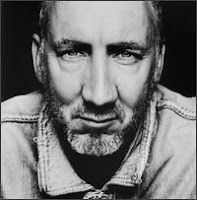
Just recently, I was reminded of the nature of our humanity in this fallen world and of God's amazing grace. The reminder came seemingly randomly--through a TV show, a movie and a book. I love it when the Holy Spirit speaks in unexpected ways. I hope I was listening well. Pete Townsend The TV show that I watched included an interview with rock legend Pete Townsend of The Who,  discussing his newly released autobiography, Who I Am. I fought back tears as he recounted a troubled life--rejection by his parents, mistreatment by his mentally ill grandmother, sexual abuse from his grandmother's boyfriends, and other sources of trauma. Though the resultant anger and sense of alienation drove him to great achievement in music, it left him with a terrible, gnawing pain deep inside his soul--feeling unloved and unlovable. This pain spilled over into his relationships, including a rocky partnership with band mate Roger Daltrey. Thankfully, after much bitterness and some shared s...

Ethics--getting real

It is common for Christians to approach the subject of ethics (sometimes referred to as Christian living) as having to do with conformance with a particular code of conduct (be it the Ten Commandments, the Sermon on the Mount, or perhaps one of Paul's household codes). From this rules-based perspective, Christian ethics becomes conceptual and thus static. In contrast, a Trinitarian, incarnational approach to ethics is fundamentally relational and thus dynamic---having to do with our participation (or lack thereof), through the Holy Spirit, in the love and life of Jesus Christ, the incarnate Son of God. In An Introduction to Torrance Theology, Discovering the Incarnate Saviour , David Torrance writes that the "basis of the Christian life...is living out and manifesting the reality of our union with Christ...The whole of the Christian's life is a summons to be obedient to Christ and to share in and with him in his continuing ministry to the world." In a chapter ...

Words for worship: Submitting to God’s mercy and imprisoning!

This post was contributed by worship leader Mike Hale. Preaching to inmates in a prison chapel service, the elderly guest preacher began with what may seem a puzzling verse from the Bible. “God has made all men prisoners of disobedience, so that he may have mercy on all.” It was fifty-five years ago this month (September,1957), and the guest speaker who based his sermon on Romans 11:32 that day was the great Swiss theologian Karl Barth, arguably one of the most important voices in theology since the Protestant Reformation. Barth was invited to speak at the prison in Basil, Switzerland from time to time, and 18 of his sermons were published in Deliverance to the Captives (1961, Harper & Brothers). Admitting the verse is not easy to understand, Barth began by saying it is best understood when starting from the second phrase—with the affirmation ‘that he may have mercy upon all’ .  Barth said that those who know Jesus  “...know it is imperative to begin at all times in our t...

Ethics and cultural context

Rather than taking a "shoot from the hip," sloganeering approach toward Christian ethics, we need a biblically-faithful approach that carefully considers which of the Bible's commands (ethical imperatives) are culturally limited (applicable only within certain cultural contexts) and which are trans-cultural (applicable universally). At times, such considerations are not difficult. For example, it is fairly obvious that some of the Old Testament's purity laws are applicable only within the context of Israel's Temple worship system. However, there are instances when such considerations are not so obvious. Divorce Consider the issue of divorce. When asked about it, Jesus noted that the Law of Moses permitted divorce, but only as a concession to human weakness ( Mat 19:1-9 ). God's ultimate will for marriage is that it be permanent "one flesh" union broken only by death. That being so, we are left asking, should remarriage following divorce be all...

Ethics and the Holy Spirit as Redeemer

Image
[Updated 5/10/19] This is part 3 of a 3-part series reviewing Karl Barth's 1929 lecture reproduced in the book  The Holy Spirit and the Christian Life, the Theological Basis of Ethics .  For part 1, click here . For part 2,  click here . We looked last time at the Spirit as Reconciler. Now we'll look at the Spirit as Redeemer . Descent of the Holy Spirit (public domain via Wikimedia Commons) As Redeemer, the Holy Spirit helps us to experience now our redemption in Christ, though its fullness will not be ours until our resurrection in glory. Thus the Holy Spirit's work as Redeemer is as  the Spirit of the Promise. And so we come to the subject of eschatology (last things). Barth comments on the Spirit's role in revealing to us the future fullness of the redemption that is ours in Christ: In his revelation [of our redemption] he promises ...a future that is a starting point... Characteristic of this promise is its reference to the reality of dea...

Ethics and the Holy Spirit as Reconciler

Image
[Updated 5/10/19] This is part 2 of a 3-part series reviewing Karl Barth's 1929 lecture reproduced in the book  The Holy Spirit and the Christian Life, the Theological Basis of Ethics . For part 1,  click here . For part 3,  click here . We looked  last time  at what Barth says about the Spirit as Creator. Now we'll see what he says about the Holy Spirit as Reconciler, working to make us "fit for God" (p. 20). Descent of the Holy Spirit (public domain via Wikimedia Commons) The Holy Spirit does this work by coming against the evil that keeps humanity from being open to God. In particular he comes against our greatest sin, which is unbelief. According to Barth, our unbelief flows from an innate "hostility toward grace" (p20)--a sinful disposition toward God himself, which the Apostle John refers to as "lawlessness" ( 1 John 3:4 ). Barth comments: We must understand the Holy Spirit...as not simply some sort of spirit like the ...