Posts

Examining the origins debate, part 5

Image
This is part 5 in a series exploring Gerald Rau's book  Mapping the Origins Debate . For other posts in the series, click a number:  1 ,  2 ,  3 , 4 , 6 ,  7 ,  8 . The origin of species Charles Darwin (Wikimedia Commons) To be taken seriously, any model of origins must credibly answer the question, How did the various species of life arise? Different models, of course, answer differently. There even are differences among the evolutionary models. For example, Charles Darwin in  On the Origin of Species,  posited the idea of the gradual development of species ( gradualism )--an idea now discounted by most evolutionary scientists as a primary or single explanation. Evidence against gradualism In positing gradualism, Darwin drew on Charles Lyell's idea of  uniformitarianism, relying on evidence from body structure (morphology) and theorizing that the primary mechanisms for gradual development of species were natural...

Examining the origins debate, part 4

Image
This is part 4 in a series exploring Gerald Rau's book  Mapping the Origins Debate . For other posts in the series, click a number: 1 ,  2 , 3 , 5 ,  6 ,  7 ,  8 . The origin of life Photo credit: Wikimedia Commons A successful model of origins provides a credible explanation of the origin of life (referred to by scientists as abiogenesis ). Rau offers a detailed analysis of this complex, controversial topic, including the strengths and weaknesses of each model. Here is an example of Rau's analysis--in this case noting a weakness he sees in strictly evolutionary models that reject outright any supernaturalistic explanations for life's origin: If cells arose gradually, as predicted by all of the evolutionary models, certain things must have preceded the first true cell, including the presence of organic molecules necessary for life. But the existence of the molecules by themselves is not sufficient, since only specific arrangements would be useful...

Seek Jesus, not the church?

In this post I'm taking a short break from the series on origins to address the topic of the church (ecclesiology). I hope you find it helpful. The rock band Fleetwood Mac performed in concert recently on NBC's The Today Show . Some people in the audience held up a banner proclaiming, "Death ends in hell--Seek Jesus, not the church." I suppose their primary goal was to "scare the hell out of people" (a topic I address elsewhere in this blog). But the banner also expressed the viewpoint that the church is unnecessary---even an obstacle to knowing Jesus. But can we have communion with Christ apart from the church? Let's look to Scripture and the teaching of the early church for answers. First, note this statement from Jesus: "I will build my church and the gates of hell shall not prevail against it" (Matthew 16:18). Note how he refers to the church as his own ("my church") and takes personal responsibility for its construction (...

Examining the origins debate, part 3

Image
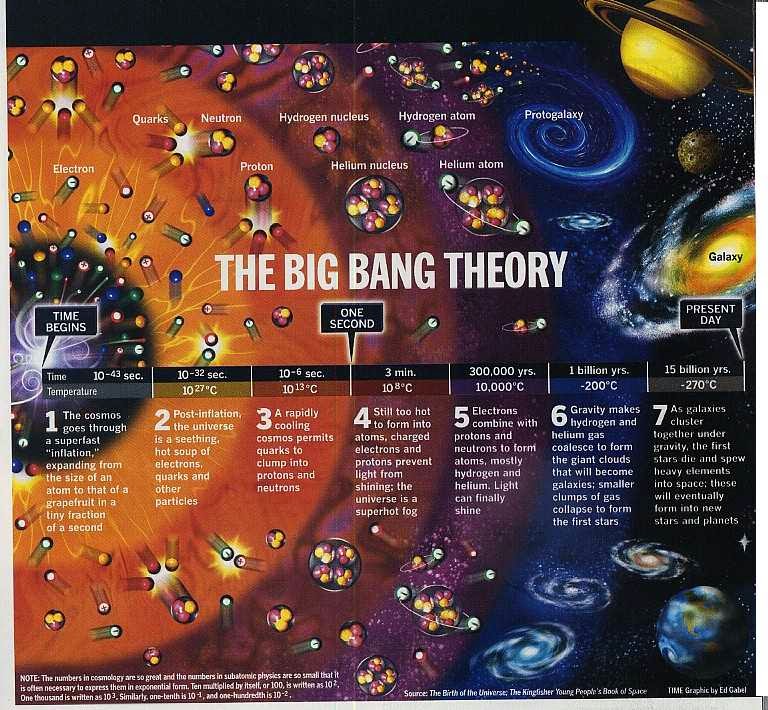
This is part 3 in a series exploring Gerald Rau's book Mapping the Origins Debate . For other posts in the series, click a number: 1 , 2 , 4 ,  5 ,   6 ,  7 ,  8 . The origin of the universe A successful model of origins will credibly explain how the universe came into being. Because this point of beginning is now long past (and thus not directly observable), the scientific evidence related to it (largely from cosmology and astronomy) must be inferred and then interpreted through a process of inductive reasoning (see the first post  in this series regarding this key issue). This inferential-inductive process is highly influenced by the interpreter's own philosophy-worldview, which, as we'll see, necessarily brings into the discussion (for theists and atheists alike) the issue of faith (belief). The big bang Though not without its detractors, the current consensus of scientists is that the universe began with a singular event typically referred to as "t...

Examining the origins debate, part 2

Image
This is part 2 in a series exploring Gerald Rau's book  Mapping the Origins Debate . For other posts in the series, click a number: 1 , 3 ,  4 ,  5 ,  6 ,  7 ,  8 . Six origins models In this post we'll overview Rau's six origins models. They fall into two groups: evolutionary models (of which there are four) and creationary models (of which there are two). We'll note points of agreement and disagreement, due to multiple factors that will become more evident as we proceed through the series. photo credit: https://www.maynoothuniversity.ie Evolutionary models If the origins debate is to be productive, a key issue has to do with agreeing on what is meant by key terms. One such term is "evolution," which is used in various ways, sometimes referring to a philosophy as much as a process. That philosophy is  naturalism , "the conviction that everything can be explained by natural causes" alone, an idea closely related to  materialism ...

Examining the origins debate, part 1

Image
This is part 1 in a series exploring Gerald Rau's book Mapping the Origins Debate . For other posts in the series, click a number:  2 , 3 ,  4 ,  5 ,  6 ,  7 ,  8 . What does this topic have to do with incarnational, Trinitarian theology? Principally this: the Triune God, who created the cosmos, now sustains it moment by moment. As noted in Scripture, "In him [God], we live and move and have our being" (Acts 17:28). There is no distant, uninvolved, deistic God here. The Triune God revealed to us in the person and work of Jesus Christ is one who has been and continues to be involved with his creation in the most intimate, personal way. However, in his grace, God does not, through his involvement, dictate all that happens to his creation as though he was a puppeteer manipulating his marionette. Rather, in love and for love (real relationship), God grants his creation (humankind included) freedom to develop --or in the words of science (which need unpa...

The practice of confession

Image
For other posts in this series on the book  Life Together , click a number:  1 ,  2 ,  3 ,  4 ,  5 ,  6 ,  7 , 8 . This is the ninth and concluding post in a series examining Dietrich Bonhoeffer's classic book on Christian community. His focus in the last chapter is the practice of confession within the church. Scripture admonishes followers of Christ to "Confess your faults one to another" (James 5:16 KJV). But as Bonhoeffer notes, many Christians neglect this instruction to their detriment: "He who is alone with his sin is utterly alone," and this despite being together with others in worship, prayer and fellowship. Without confession as part of the practice of the community, its fellowship "permits no one to be a sinner... everybody must conceal his sin from himself and from the fellowship." The result is people gathered together, yet living alone "in lies and hypocrisy" (p110). Confession leads to truth and liberation This ...

Ministries of the Word and Authority

For other posts in this series on the book  Life Together , click a number:  1 ,  2 ,  3 ,  4 ,  5 ,  6 , 7 , 9 . The previous post  in this series noted Bonhoeffer's call for the practice of meekness as essential to the health of a faith community. He goes on to discuss the related practices of listening to one another (Christians, particularly Christian leaders, too often speak before listening, p97), helping one another, and bearing one another's burdens--including one another's sins though the practice of unconditional forgiveness (p102). The Ministry of the Word When these ministries of grace are in place, "the ultimate and highest service can also be rendered, namely, the ministry of the Word of God to others." Because this ministry is often abused within the church, Bonhoeffer gives this warning: [Speaking the Word is] that unique situation in which one person bears witness in human words to another person, bespeaking the whole co...

Preparing for Advent and Christmas

It's now September, which means that Advent, followed by Christmas, is not far away. It's likely that those who lead the church in worship are already preparing. This post may be of help.  The Advent/Christmas season celebrates (in this order), the future, present and past "comings" of the incarnate Son of God, our Lord Jesus Christ ("advent" from Latin "adventus," means "coming"). These celebrations begin a new cycle in the church's annual worship calendar in much of Western Christianity. For an incarnational, Trinitarian perspective on the meaning of this important season, together with other resources to help with preparation, click here . (Note: the first Sunday of Advent in 2014 is November 30).

Holding one's tongue, practicing meekness

For other posts in this series on the book  Life Together , click a number:  1 ,  2 ,  3 ,  4 ,  5 , 6 , 8 ,  9 . In chapter 4 , Bonhoeffer addresses the topic of ministry within Christian community. He begins by noting an evil that quickly arises in community: a spirit of competitive, self-justifying judgmentalism. It arose early on among Jesus' own disciples: "There arose a reasoning among them, which of them should be the greatest" (Luke 9:46). Because this spirit quickly destroys fellowship, "It is vitally necessary that every Christian community... face this dangerous enemy squarely, and eradicate it (p90). But how? Bonhoeffer suggests several remedies, all related to spiritual disciplines that help us minister (serve) in truly Christ-like ways. We'll cover two of these disciplines this time and more later. 1. The discipline of holding one's tongue According to Bonhoeffer, an important and effective antidote for the insidious poison of...

Solitude and silence

For other posts in this series on the book Life Together , click a number: 1 , 2 , 3 , 4 , 5 , 7 ,  8 ,  9 . So far, Bonhoeffer has emphasized the corporate practice of the spiritual disciplines. Now he addresses our time alone: Let him who cannot be alone beware of community . He will only do harm to himself and to the community. Alone you stood before God when he called you; alone you had to answer that call; alone you had to struggle and pray; and alone you will die and give an account to God. You cannot escape from yourself; for God has singled you out. If you refuse to be alone you are rejecting Christ's call to you, and you can have no part in the community of those who are called.... But the reverse is also true: Let him who is not in community beware of being alone.... If you scorn the fellowship of the brethren, you reject the call of Jesus Christ, and thus your solitude can only be hurtful to you.... Only in the fellowship do we learn to be rightly alone, and o...

Trinitarian theology---Calvinist or Arminian?

Image
Jacob Arminius John Calvin Unfortunately, some try to force-fit Trinitarian theology into the continuum that exists between Calvinism   and Arminianism . Doing so overlooks (or at least oversimplifies) the history of Christian theology, which goes back to the Apostles and from there flows in multiple streams, including Orthodox streams in the East; and Catholic, Reformed, Lutheran, Anglican, Episcopal and other streams in the West. Contrary to common misunderstandings held by some (many?) Western Protestants, Calvinism and Arminianism are not the only theological "games in town." Trying to locate Trinitarian theology within the continuum between those dueling theologies is like trying to force the proverbial square peg into a round hole. The result, often, is badly misinformed criticism of Trinitarian theology. Martin Luther In a recent post on The Gospel Coalition (TGC) blog, Trinity Evangelical Divinity School (TEDS) professor Douglas Sweeney showed how try...