Posts

What Sort of Human Nature Did Jesus Have?

Image
The doctrine of the Incarnation declares that the eternal Son of God, in adding humanity to his divinity, became Jesus Christ—one person with two natures; fully God and fully human. Reflecting on that truth, many ask, What sort of human nature did Jesus have? Some say it was the one possessed by Adam and Eve before the fall. Others say it was human nature corrupted by the fall. Though GCI does not consider this issue to be a core doctrine, it does (in alignment with historically orthodox Christian doctrine) teach that our salvation as humans is directly and fundamentally related to Jesus being human on our behalf in every respect. By uniting human nature with his perfect and perfecting divine nature, the Son of God brought to humanity the regeneration and healing we so desperately need yet are unable to achieve for ourselves. This means that Jesus not only took upon himself our sinful external condition but also our human nature, corrupted by the fall. This understanding clarifies t...

Inhabiting the Christian Year: Epiphany

Image
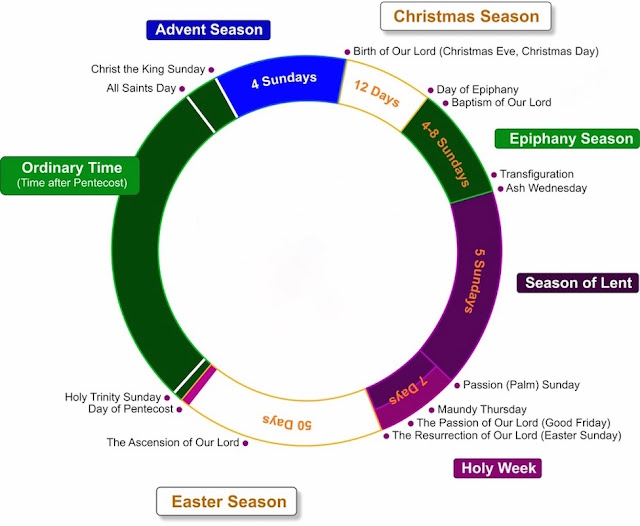
This is part 4 of a series looking at the Western Christian year (liturgical calendar). For other posts in the series, click a number:  1 ,  2 , 3 , 5 , 6 ,  7 ,  8 . So far in this series, we've looked at the meaning of Advent (the season of waiting) and Christmas (the season of wonder). Now we'll look at the meaning of Epiphany---the season of manifestation, which focuses on key events in Jesus' earthly life that manifest (reveal) his identity as the incarnate Son of God, our Savior. Our word epiphany comes from the Greek word  epiphaneia , meaning “to cause to appear” or “to bring to light.” Bobby Gross, in  Living the Christian Year: Time to Inhabit the Story of God ,  notes that  the Greek word can refer to the visible manifestation of a deity (also in ancient writings, the arrival of a ruler honored like a god) or to an experience of sudden insight or revelation: those “aha” moments when we “see the light.” (p. 83) The apost...

Inhabiting the Christian Year: Christmas

Image
This is part 3 of a series looking at the Western Christian year (liturgical calendar). For other posts in the series, click a number:  1 ,  2 , 4 , 5 ,  6 ,  7 ,  8 . Last time  we explored the meaning of Advent---the season of waiting. Now we'll look at Christmas--- the season of wonder. Christmas is a season (12 days), not just one day.  As noted by Robert E. Webber in  Ancient-Future Time , Christmas  "points to the mystery of redemption that took place in the incarnation" (p. 57). Note the two elements: incarnation and redemption. Christmas celebrations within the church should address both for, as noted by Thomas F. Torrance, they are inseparably linked in God's plan of salvation through Christ: It is in the resurrection that we have the unveiling of the mystery of the incarnation: the birth and resurrection of Jesus belong inseparably together and have to be understood in the light of each other.... We are to think of the line fro...

Inhabiting the Christian Year: Advent

Image
This is part 2 of a series looking at the Western Christian year (liturgical calendar). For other posts in the series, click a number:  1 , 3 , 4 , 5 ,  6 ,  7 ,  8 . (Updated 11/2021) The Western Christian worship year begins with Advent---a season spanning the four Sundays prior to Christmas (in 2021 the first Sunday of Advent is November 28). Robert E. Webber, writing about the meaning of Advent in Ancient Future Time: Forming Spirituality through the Christian Year , shares this comment: Advent is the time when God breaks in on us with new surprises and touches us with a renewing and restoring power. In Christian-year worship and spirituality we call upon God for a new breaking in, a fresh outpouring of his Spirit. (p. 38) The Advent Season is a powerful and important reminder that God is not remote, aloof or uninvolved. It tells us that God has come, is coming and will come again ("advent" means "coming"). This truth helps offset a message that is pr...

Inhabiting the Christian Year: introduction

Image
This is part 1 in a series looking at the Western Christian year (liturgical calendar). For other posts in the series, click a number: 2 , 3 , 4 , 5 ,  6 ,  7 ,  8 . In this series, we'll take a journey through the Western Christian Calendar. Doing so will help us see how the ancient liturgy of the church helps us "inhabit" the gospel, which is the story of the Triune God's work for our salvation, centered on Jesus. I believe that this liturgy, rightly used, is of tremendous value in helping us understand (both cognitively and experientially) the gospel as viewed through the lens of an incarnational Trinitarian theology. Some thoughts about liturgy In this series, we'll be exploring the Christian worship year as presented in the liturgical calendar of the Western Christian Church---the calendar that serves as the organizing framework of  The Revised Common Lectionary   (RCL). The RCL shapes the liturgy of many Protestant and Anglican-Episcopalian denominat...

How theology affects ministry

Image
Ted Johnston   A few years back, I had a conversation with J. Michael Feazell, then Vice President of Grace Communion International (GCI). We talked about how incarnational Trinitarian theology impacts the practice of Christian ministry. A video of that conversation is posted on GCI's website at  www.gci.org/media/videos/ted-johnston-how-theology-affects-ministry/ .

"You're Included" interviews with Trinitarian theologians

Image
GCI's video program  You're Included  features half-hour interviews with theologians on various aspects of Trinitarian theology. The catalog below (in alphabetical order by last name of the interviewee) links to more than 60 interviews conducted with 12 theologians. For a transcript of each interview, click on "program transcript" on the individual video page, or click  here  and here  for PDF documents with transcripts of multiple interviews. Jeremy Begbie ---You're Included interviewee. Interviewee Interview topic Ray Anderson Starting Theology With Jesus. The importance of having our theological viewpoint based on God's revelation of himself in Jesus Christ. Ray Anderson God and the Prodigal Son. Relating our lives to God’s reality, what God has become in becoming human, adoption, the parable of the prodigal, our necessary connection with Christ, and the emergent church. Jeremy Begbie Music and Theology.  Dr. Begbie shares...