Posts

Torrance: the homoousion is good news!

Image
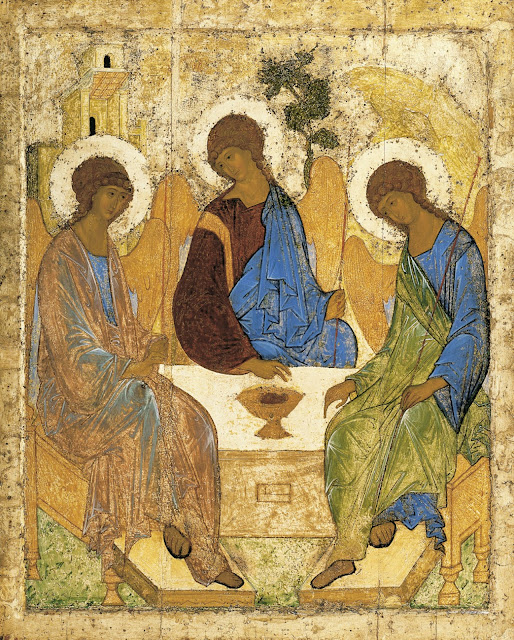
This post [updated 3/24/2019] continues a series that explores  T.F. Torrance in Plain English  wherein author Stephen D. Morrison unpacks nine key ideas in the Christ-centered, Trinitarian theology of  Thomas F. Torrance . For other posts in the series, click a number: 1 , 2 , 3 , 5 ,  6 ,  7 ,  8 ,  9 .   Last time we looked at Torrance's key idea that natural theology is useful in understanding God, but only when viewed in the light of divine revelation concerning God's true nature. This post looks at the divine nature by exploring Torrance's key idea that the tri-personal God (the Holy Trinity) is revealed to us in Scripture as "one in being" ( homoousion in Greek). Stephen Morrison comments on the meaning and importance of the homoousion  in Torrance's scientific Trinitarian theology: The being and acts of the Father and the Son are one and not divided ( homoousion : "one in being"). This is a central doctrine in Torranc...
Torrance: relating grace and nature

Image
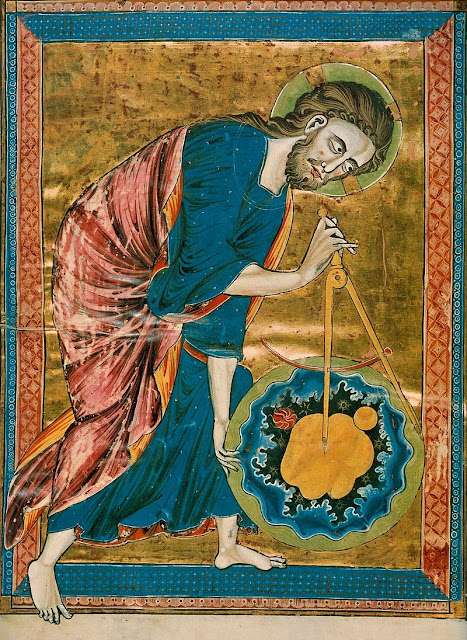
This series explores  T.F. Torrance in Plain English  wherein author Stephen D. Morrison unpacks nine key ideas in Thomas F. Torrance's Christ-centered, Trinitarian theology. For other posts in the series, click a number: 1 , 2 , 4 ,  5 ,  6 ,  7 ,  8 ,  9 .   Last time we looked at Torrance's key idea that God is known truly only when we know him in accordance with his nature  (thus scientifically). This time we'll examine a corollary key idea, here summarized by Stephen Morrison: Torrance agrees with Karl Barth's famous rejection of an independent  natural theology, but goes beyond Barth by integrating (contextualizing) natural theology within divine revelation. This is understood best through the relationship of grace and nature: grace does not destroy nature, it perfects and fulfills nature. (p. 67) With this key understanding, Torrance overcame the false (and unfortunate) dualism that views revelation (fa...

Torrance: knowing God according to his nature

Image
This series explores  T.F. Torrance in Plain English  in which author Stephen D. Morrison unpacks nine key ideas in Thomas F. (T. F.) Torrance's Christ-centered, Trinitarian theology. For other posts in this series, click a number: 1 , 3 ,  4 ,  5 ,  6 ,  7 ,  8 ,  9 .   Last time we looked at T.F.'s theological method, which yields what he calls a  scientific theology . This post looks at a fundamental precept of that method: We know God truly only when we know him in accordance with his nature (thus scientifically). For T. F., knowledge in any field of inquiry (be it a natural science or Christian theology) is true only to the extent that  it accords with the actual nature of the reality it seeks to describe. Borrowing a phrase from Greek, T. F. calls such knowledge  kata physin (κατα φυσιν) --- knowledge that is  according to nature.  As Morrison notes, "Behind kata physin  is the notion ...

Torrance: a scientific theology

Image
This series explores  T.F. Torrance in Plain English  in which author Stephen D. Morrison unpacks nine key ideas in Thomas F. (T. F.) Torrance's Christ-centered, Trinitarian theology. For other posts in the series, click a number: 2 , 3 ,  4 ,  5 ,  6 ,  7 ,  8 ,  9 .   This blog frequently explores the writings of Trinitarian theologian Thomas F. (T.F.) Torrance. Some complain that T.F. is hard to understand and I felt that way when I started reading him about 12 years ago. No question, Torrance is challenging to read---particularly at first. There are a couple of reasons: First, in most of his books he writes as a theologian to other theologians using technical theological terms. Second, T.F. explains ideas and concepts that run against the grain of everyday experience, asking us to look at reality (God in particular) in new (even radically new) ways. Over the years in this blog, I've tried to put T.F.'s teachings into comm...

Inhabiting the Christian year: Pentecost & Ordinary Time

Image
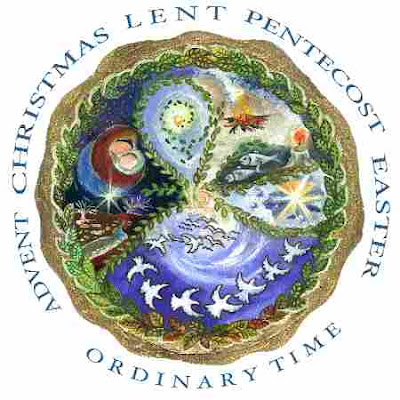
With this post we conclude our series looking at the Western Christian year  ( liturgical calendar ) . For the other posts in the series, click a number:  1 ,  2 ,  3 ,  4 ,  5 , 6 , 7 , and  click here for a related post on the shape of the church's liturgy. So far in this series on inhabiting the Christian year, we've looked at Advent , Christmas , Epiphany , Lent , Holy Week and Easter . Now we conclude the series looking at Pentecost and Ordinary Time . Pentecost The ancient church chose to end the 50-day-long season of Easter with a Pentecost Sunday celebration. It was on Pentecost (50 days after the Resurrection and 10 days after the Ascension) that the risen, ascended Lord poured out the Holy Spirit in order to form and empower the church for mission. You will recall that at the Last Supper, Jesus promised his disciples that he would send them "another helper," the Holy Spirit (John 14:16, ESV). Following his resurrection and ascen...

What is the relationship between doctrine and theology?

Image
As readers of this blog know,  The Surprising God  deals primarily with theology, though occasionally looks at doctrine. But what is the difference between theology and doctrine? How are they related? This post offers brief answers for your consideration. Doctrine (and dogma) As used in Christian circles, the word doctrine  typically refers to the primary teachings of a particular denomination or church. Orthodox Christian doctrine elaborates the dogma (core beliefs) that have been set forth in the historic and orthodox creeds (e.g. the Apostles Creed and the Nicene Creed). Though most churches embrace the creeds as the core of their doctrinal teaching, different doctrines have emerged from this core. Holy Eucharist at the Council of Nicaea (public domain via Wikimedia Commons) Dogma comes from the Greek word for a thought-out idea—a particular position you hold. Doctrine comes from the Latin word meaning “to teach" or "teachings.” We teach (through doctrine) ...

Inhabiting the Christian Year: Easter

Image
This is part 7 of a series of posts exploring the Western Christian year  ( liturgical calendar ) . For other posts in the series, click a number:  1 ,  2 ,  3 ,  4 ,  5 , 6 , 8 . So far in this series, we've looked at  Advent ,  Christmas,   Epiphany ,  Lent  and Holy Week . The first three constitute the  cycle of light and Lent begins  the cycle of life , which continues with Holy Week, Easter and Pentecost. In this post, we'll look at Easter---the celebration of our Lord's resurrection. Icon of the Resurrection (public domain via Wikimedia Commons) According to Bobby Gross in Living the Christian Year ,  Easter is both a day (Easter Sunday, sometimes called Resurrection Sunday), and a season (sometimes called Eastertide) lasting 50 days: Within a century of Jesus' rising, the church had established the extended Easter season. But why fifty days? First, because the enormity of the resurrec...

Inhabiting the Christian Year: Holy Week

Image
This is part 6 of a series exploring the Western Christian year ( liturgical calendar ) . For other posts in this series, click a number:  1 ,  2 , 3 , 4 , 5 , 7 ,  8 . So far, we've looked at  Advent , Christmas,   Epiphany  and Lent . The first three constitute what some call  the cycle of light. Lent then begins  the cycle of life , which continues with Holy Week, Easter and Pentecost. In this post, we'll explore Holy Week, which includes Palm/Passion Sunday, Maundy Thursday, Good Friday and Holy Saturday (with the last three often referred to as the "sacred Triduum"). Let's begin with a quote from Living the Christian Year  by Bobby Gross. It will provide some important historical context. Originally, the first Christians recalled and celebrated the death and resurrection of Jesus in a single day---and they did so once a week, on the Lord's Day! But it was not long, probably by the end of the first century, before a more...

What shape should our worship take?

Image
Worship is the church's primary ministry Through worship, the church prepares to participate with Christ in his mission to draw the world into worship.[1] Worship and mission are thus integrally connected. Knowing this leads us to ask: What shape should our worship take? The answer from Scripture and 2,000 years of Christian experience is that authentic Christian worship is Christ-centered and gospel-shaped. This understanding has significant implications for how we approach liturgy (our form of worship). Though some Christians favor what is sometimes called "non-liturgical" or "free" worship, it can be argued on the basis of Scripture and Christian history that a liturgical form of worship (one that follows the annual pattern shown below) is a helpful, even essential tool for honoring God in worship while drawing the church together in unity of belief and practice, leading to the spiritual formation of its members, including their involvement in Christ's...

Inhabiting the Christian Year: Lent

Image
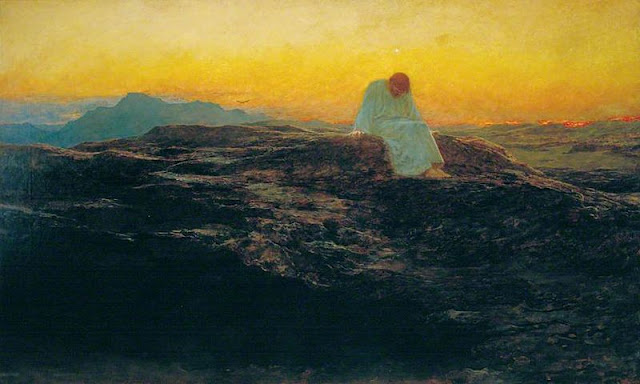
This is part 5 of a series exploring the Western Christian year (liturgical calendar). For other posts in this series, click a number:  1 ,  2 , 3 , 4 , 6 ,  7 ,  8 . Cycles of Light and Life Following the  introduction,  so far in this series we've looked at  Advent , Christmas and Epiphany . Together, these three seasons of worship comprise what is sometimes called the cycle of light because all three focus on the coming/revelation of Jesus, the light of the world and the light of life (John 8:12). That cycle is then followed in the liturgical calendar by the cycle of life, which includes Lent (called "Easter Preparation" in Grace Communion International), Easter and Pentecost---three seasons focused on the purposes for which Christ came, namely the self-giving sacrifice of his life to free the world from the domain of Satan and thus secure forgiveness and healing for the peoples of the world. Consequently, as we reflect on both t...