Posts

Christmas Readers Theater

Special thanks to Rick Shallenberger for providing Christmas Readers Theater dramatic readings.  You can download the pdf file from the following link: http://www.wcg.org/MinDev/Web%20Documents/Christmas_Readers_Theater.pdf

The Trinity imaged in our humanity

Image
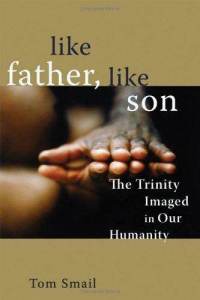
In a former post  I quoted Tom Smail's book, "Like Father, Like Son, the Trinity Imaged in Our Humanity." Here are additional quotes from chapter 1: If we are made in the image of God, we are made in the image of the Trinity; and the life of the Trinity must in some sort be reflected in the pattern of our human life. (quoting John F. X. Hariott in the flyleaf) To make gods in the image of men is the essence of all idolatry, whether the resultant idols are the physical artifacts of our hands or the cerebral projections of our minds, and the result of both is an impotent religion that imprisons us in its illusions and distracts and distances us from the genuine sources of our liberation. (p. 19) If the idols of our own making that reflect our own image are toppling all around us, it might be time to ask, What vision comes into focus when we see ourselves not as the masters but rather the mirrors of an ultimate reality on which we depend? Is there any word from ou...

Songs for the coming of Jesus

Image
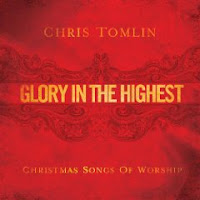
This post was contributed by worship leader Mike Hale. A stellar 2009 Christmas album is Glory in the Highest: Christmas Songs , from Chris Tomlin (and friends) – a collection of traditional songs recorded live in a worship setting, along with outstanding new praise and worship material such as Born That We May Have Life , Emmanuel (Hallowed Manger Ground) , My Soul Magnifies the Lord, Matt Redman’s Light of the World and several more.  Separate accompaniment tracks can be purchased. Other favorite holiday albums from recent years include Third Day: Christmas Offerings (2006) with the powerful and distinctive southern rock vocal styling of lead singer Mac Powell and the great sound of a band that has been a fan favorite at Christian concerts for years.   This Is What Christmas Means to Me (2007) by Tommy Walker and the C.A. Worship Band is described by Tommy as a worship project with Christmas as the theme. Tommy is a prolific songwriter with a unique blend of pop/jazz/R&...

From Hope to Joy: Advent and Christmas/Epiphany

Image
This post was contributed by worship leader Mike Hale. To be sure, the decorations, gifts, candy and cookies were huge hits, but even as a child, church events around Christmastime captured the imagination of this Illinois boy.  Powerful stories and songs about the coming of Jesus carried anticipation, drama, miracle, mystery, wonderment, and celebration that brought together God, angels and all people—including a kid like me.  From small simple gatherings to elaborate pageants, each created special memories and valuable open-ended questions.  And that's one more reason this blog exists about Christ-centered theology that shapes worship. I’d like to suggest four helpful books—two that address the entire church year, and two that are specific to Advent, Christmas and Epiphany (each book is available at Amazon.com).  Even if you normally do no more than light another candle on the Advent wreath and add one more verse of  “O Come, O Come Emmanuel” each week—these b...
Belong before believe?

Image
Jesus includes all humanity, including non-believers in his love and life. Is it not then appropriate for the church to embrace non-believers and include them in the life and ministry of the church?  In short, is it OK for people to belong before they believe?  In answer, we need only look to what Jesus did. In calling and forming his first group of followers, Jesus reached out to several young men who did not yet believe in Jesus - though Jesus believed in them, and included them in his group (and thus in his ministry) before they came to believe in him as their Messiah, the Son of God. In a progressively post-Christian world, this insight has particular relevance - people will often need to experience the loving, inclusive community of Jesus' followers before they come to believe that Jesus is their Savior and Lord. For more on this topic,  click here to download a paper on the Mosaic Alliance Project written by Eric Bryant (pictured left). You can read...

Elvis has left the building

Image
This post was contributed by worship leader Mike Hale. Early in the career of Elvis a concert promoter famously announced “Elvis has left the building” in hopes that screaming fans would begin calming down upon learning that Elvis had indeed exited the hall and would not be returning for another encore.  The promoter had brought Elvis to the fans in the first place and was now announcing his departure.  The phrase about Elvis became a punchline for whenever someone makes a dramatic exit.  (Need we note Elvis is pictured below?) Sometimes a worship service is conducted in a way that implies the pastor or the worship leader is somehow by words or actions bringing the presence of God into the building.  I’m sure I’ve done that myself.  For example a person might pray for Jesus or the Holy Spirit to come into the room. The implication is that God has come from far away to meet with us during the worship service and will then leave the building, awaiting the next inv...

Pulitzer Prize in worship?

Image
This post was contributed by worship leader Mike Hale. My journalist friend described his method for writing.  After completing research for an article, he quickly writes and reviews the very first sentence he has written.  In reading just those first few words it becomes clear to him that the Pulitzer Prize for journalism (pictured left) cannot be won with the article he has just begun.  And having rid himself of any notion of attaining journalistic glory, he is then free to simply do his best with the time and resources available, and what he writes is nearly always quite sufficient for his publisher and readership.  Being realistic can be enabling.  I got a kick out of my friend’s admission, and have tried to take his wisdom to heart.  But it gets more complicated with ministry and worship.  While there’s no Pulitzer Prize for a worship service, we tend to set awfully high standards for ourselves.  We want powerful life changing worship service...

The continuing (glorified) humanity of Jesus

Click here  to read a helpful and succinct blog post at TheoCentric. It s ummarizes the orthodox, biblical teaching concerning Jesus' ascension (including his continuing, glorified humanity) . 

N.T. Wright on "me and Jesus being in love"

Image
This post was contributed by worship leader Mike Hale. Earlier this year, renowned New Testament theologian N.T. Wright (Bishop in the Church of England, author of over 40 books) spoke at a public lecture at Lake Avenue Church in Pasadena CA while in town to teach a DMin class at nearby Fuller Seminary.  During the Q&A session following his lecture, Wright (pictured left) made the following insightful comments on what he refers to as the type of worship song that is basically about “me and Jesus being in love.” Romance is wonderful, but a steady worked out relationship is better. Striking a match is very exciting, but its not going to last long. Use the match to light a candle and it will give a steady beautiful light to the room. You might say, let’s have more matches and sparklers too! But you can’t live on that. I really do worry about that. In my Diocese some of the young people sing those romantic songs all the time, and I don’t want to tell them to stop singing them...

The vicarious humanity of Jesus

One of our blog readers, Gerald McNaughton, wrote me wondering if by referring to Jesus' "vicarious humanity" we are saying that he participates in humanity only "vicariously."  Here is my reply to Gerald's question: To speak of Jesus' "vicarious humanity" is NOT to say that Jesus is anything less than fully human. Scripture declares that the eternal Son of God became human through his incarnation, and remains human forever (see 1Tim. 2:5). The resurrected, ascended Jesus is fully God and fully human (now glorified in his humanity). And the one who will return in glory will be fully God and fully human. Jesus is the permanent union of God and humanity in his own person: one person with two natures. Thus to say that Jesus is the "vicarious human" is not to suggest that he is anything less than fully human. Rather it is a statement concerning the meaning of his humanity for the benefit of all humanity. Because Jesus in his divin...

Praise God for His New Creation

This post was contributed by worship leader Mike Hale. What songs do you use at the end of a service to send the congregation on its way? Often our “song of sending” will be one of re-dedication to serving with Jesus. But on some occasions when the scriptures, prayers, and sermon or testimonies speak powerfully of the grace and mercy of God, there may be no more fitting conclusion than to offer up pure praise (a doxology)—giving all glory to God. Because we were crucified with Jesus and now have new life in the risen and ascended Jesus (Eph. 2:4-10, Gal. 2:20), we are new people of the new creation. And just as the angels sang for joy at the original creation (a universe meant to glorify God), today by the Holy Spirit we join with Jesus (the new Adam) in singing praise and giving glory to God as part of the new creation. One such doxology of praise is 1 Tim. 1:17. Paul has just described having once been a violent, persecuting, blasphemous, unbelieving creature, and feeling like t...

Thomas F. Torrance - not an "ivory tower" theologian

Image
On this blog we've often referred to the writings of trinitarian theologian Thomas F. Torrance (pictured right). In this post, worship leader Mike Hale shares interesting information concerning Torrance's life - illustrating that he was no "ivory tower" theologian. Sometimes theologians are dismissed as living in the ivory towers of academia, far from the harsh realities of life. Thought of as having their head in the clouds, their theology might be dismissed as having little or no relevance in the "real" world, including the world of Christian living and ministry. However, the life of  Thomas F. Torrance (arguably one of the premier theologians of the second half of the twentieth century) stands in stark contrast to any such notion. Elmer Colyer states that Torrance’s theology arose out of the evangelical and doxological life of family and the church, including pastoral ministry and personal experience in numerous life-threatening situations, beginnin...

Worship, Community & the Triune God of Grace

This post was contributed by worship leader Mike Hale. When the Rev Professor James B. Torrance died at the age of 80 in 2003, Christianity Today magazine chose to highlight three areas of his life of service – 1) he was Professor Emeritus of Systematic Theology at University of Aberdeen in Scotland, 2) he was known as a mentor to other Christian leaders, and 3) he wrote “Worship, Community, and the Triune God of Grace” (IVP, 1997). He had also been a family man and a pastor, and whether serving in pastoral ministry, teaching theology, writing, or in mentoring others, Torrance was keen on worship and on discussing in simple but profound language the relationship of grace and the continuing priesthood of Jesus in Trinitarian worship.  It is interesting to note that “Worship, Community, and the Triune God of Grace” [WCTGG] contains a mere 130 pages, and yet it has gained wide influence in denominations around the globe, as in it Torrance offers a brief but profound discussion of pray...

A trinitarian perspective on evangelism

If all people are included already in Jesus, why be involved in evangelism? The GCI  Ministry Development Team  addresses this question in a seminar titled,  Relational Evangelism . The subtitle speaks to our trinitarian focus: "Sharing with Jesus in relating with non-believers." Evangelism from this perspective is not about bringing Jesus to people as though he were absent . Rather it sees evangelism in light of the truth that Jesus is present - including non-believers in his life, and relating to them in the Spirit, expressing the Father's love and grace. Evangelism is about participating with Jesus in that relating. By doing so we declare   the good news (which is the biblical definition of evangelism), by being the good news and then verbally sharing our own experience of Jesus (who is the good news). In short, we help people identify and come to know the Jesus who is already present in their lives. And we invite them to participate active...

What is our part in a face-to-face relationship with Jesus?

Craig Kuhlman submitted the following questions related to our personal participation in the salvation we have in Jesus. I encourage your reply to his questions via "comments." How can we maintain engagement (in face-to-face relationship with Jesus) without ebb and flow?  How do we continue to live in that relationship and bear spiritual fruit without becoming formulaic, or something "that must be done" by ourselves, when all was done by Him?  How can we maintain the Spirit's active regeneration that comes from face-to-face relationship with Jesus and yet avoid the impression we must "do" the spiritual disciplines, when Jesus has already done it all?  What is "our part," if any? And is it fair to say, that if there is any "our part," isn't that part initiated by Him to begin with?  If we have a part now, why didn't we have it from the beginning when we were dead in sin?

What does trinitarian theology say about ministry?

Image
Some wonder if trinitarian theology leads to inactivity (if all are included already, why bother with ministry?).  I address this question in a recently posted  You're Included  interview with Mike Feazell. Click here  to watch online.

The Trinity Imaged in Our Humanity

Image
I'm reading Like, Father, Like Son, the Trinity Imaged in Our Humanity by Tom Smail (pictured left) who presently serves as senior visiting research fellow at Kings College in London. I think Smail does an excellent job of exegeting from a trinitarian perspective the scriptural teaching concerning humankind created in God's image. In short, his thesis is this: the image that humankind is given in creation and that is restored in redemption is the image of the Father, Son and Spirit - the tri -personal God revealed to us in Jesus. He notes that we image God in two ways: in God's oneness (which is his three in oneness in perichoretic relatedness); and in God's threeness (the distinctive qualities and roles of each person of the triune God). Smail then explores the implications of this triune image of God as it is expressed in and through various aspects of our humanity. Concerning the imaging of the Holy Spirit in our humanity (inclusive of human culture) he...

A trinitarian critique of "Walking with God" by John Eldredge

Image
John Eldredge (pictured right) of Ransomed Heart Ministries, is a popular evangelical Christian author of such books at "Sacred Romance" and "Wild at Heart." A reader of this blog offers in this post a critique of Eldredge's book "Walking With God." Though this critique is not intended to discount the positive benefits some have derived from Eldredge's books, it does object to some of the premises of "Walking with God" that seem in conflict with a trinitarian / incarnational understanding of the gospel. See what you think. And feel free to send to The Surprising God critiques (positive and negative) of this or other books as we reason together in the light of Jesus. -Ted Johnston moderator, The Surprising God It seems to me that "Walking with God" [ WWG ] espouses a form of magical thinking by implying that God can be manipulated by human activity. Through a highly individualistic approach to Scripture (where every verse...

The incarnation includes all creation

Image
A key concept of trinitarian Christ-centered theology is that the incarnation encompasses all the created order. In the incarnation of the Son of God, the agent of creation, all the cosmos (not just humanity) is included in God's work of redemption - re-creation. This view of the incarnation is expressed by Robert Webber (pictured right) in his book  Who Gets to Narrate the World? The book is cited in the September 1 issue of Preaching Now , noting that Webber (now deceased) attributes much of the secularization of Western culture to the church's shift away from this comprehensive view of the incarnation. According to Webber... "God, in the incarnation, took up unto himself the entire creation, so that the creation redeemed by God himself is now to be once again, as in the Garden, the theater of his glory. The ancient church understood the impact of creation, incarnation and re-creation on all of creation, and that is why Christians were the leaders in the arts...

God is for us!

Image
The understanding that God is Trinity, tells us not only who God is, but also what God does. The good news is that God, who is relational love in his being, is relationally loving in his doing. Thus to know God as Trinity is to know the God who as love, and in love, saves us. To know God as Trinity is to know that God is for us! This stunning truth is revealed in the person of Jesus, the incarnate Son of God who as one of us, is God with us and for us. This vital point is made well by Martin Davis in a recent post on his blog . Martin (pictured right) provides a careful analysis of the development of thought concerning God within Western Christianity - a development that, sadly, lost much understanding concerning God's triune being and relating. Thanks Martin for your contributions to this conversation.

Speaking of Life: trinitarian theology

Image
Click here to view a Speaking of Life program with Dr. Joseph Tkach (pictured left) that helpfully summarizes the trinitarian theology discussed in this blog. For a listing of other Speaking of Life programs, click here .

The gift of faith - to whom and when?

A reader of this blog submitted the following question: Since salvation in Jesus comes through faith and this faith is God's gift, why does it seem that God is not giving this gift to everyone at this time? Here is my reply: I agree that the faith needed for salvation is, like salvation itself, God's gift - it's all of grace! Moreover, I understand from Scripture that this faith unto salvation is not our own - rather it is our sharing in the faith of the God-man Jesus who believes on our behalf, and shares his saving faith with us (see the KJV translation of Gal. 2:20, which rightly translates "faith in Jesus Christ" as "faith of Jesus Christ"). It is the faith of Jesus, the vicarious (representative - substitute) human, that unites humankind to God. Both Calvinism and Arminianism (two dominant evangelical Protestant theologies) assert that the faith that leads to salvation is, indeed, God's gift and thus not to be viewed as a m...

I. Howard Marshall on penal substitution

Image
Among contemporary evangelical (including trinitarian ) theologians, much (often heated) discussion continues concerning whether or not the idea of "penal substitution" is a valid way to characterize the atonement . Some sweep it aside as hopelessly flawed. Others assert its validity even if they object to certain ideas attached to its use. An influential theologian in the second camp is I. Howard Marshall (at left), who argues for penal substitution, but against certain biblically indefensible ideas that have come to be attached to the concept. In "The Theology of the Atonement" ( click here to download), Marshall does a good job of surveying the issue from the perspectives of the Bible and contemporary theological literature. He places the issue in a trinitarian context without sweeping it aside. See what you think of his viewpoints. I think it would have been helpful if he had said more about the incarnation (Jesus' vicarious humanity), and the NT m...

Sanctification and glorification

Warren Wilson sent the Surprising God Blog the following questions: I've recently read some articles on the Internet that said that since Jesus had a fallen human nature but was able to completely avoid sin through the power of the Holy Spirit, that we who also have the Spirit should be able to become completely sin free in this life. That seems to overstate things to me and ignores that Jesus' situation and ours is not exactly the same. Am I correct in that? Also, I've never seen anything written about the question of whether Jesus continues to have a fallen human nature in heaven? In other words, what effect does glorification have on fallen human nature? Are we doomed to continue to have fallen human nature for eternity, even after we're glorified? Thanks Warren for your questions. I agree that the human nature assumed by the Son of God through his incarnation in the person of Jesus is the *fallen* nature we all have. By taking on our nature, Jesus ...

Jesus and God's judgment

When it comes to the topic of the final judgment, many have formed opinions based on what I feel is an inaccurate reading of Revelation, leading them to conclude (in error) that when God comes to earth at the end of time he comes as an angry, hostile and vengeful God. But through a careful reading of Revelation, we are introduced to the Lord, the God of covenant grace, who in the person of the God-man Jesus, returns to earth as the one he truly is - the Savior of all mankind. This Jesus who returns is the same one we met in the Gospels who walked the roads of Galilee as a "friend of sinners"; who died on Calvary's cross to save sinners; and who cared for his doubting disciples after his resurrection, promising to be with them "always, unto the very end of the age" (Mat. 28:20) as they reach out with Jesus' love to all the world. It is this Jesus, God's Lamb, who in Revelation comes to earth not to destroy , but to save , and his personal pre...

Preaching grace

Image
In " Christian Preaching: A Trinitarian Theology of Proclamation ," Michael Pasquarello writes, "Perhaps the most offensive and scandalous aspect of speaking the Word of God in our time may be the notion of grace, which announces that from beginning to end our human lives are not of our own making, management, or control. In learning to confess that we are sinful creatures of a gracious God, we discover that our lives are constituted as gifts rather than possessions, whose purpose is to know and love our Creator. "In Christian worship, then, we acknowledge our grateful dependence according to the particular wisdom displayed in the self-giving of Christ, through which the Spirit evokes responsiveness and receptivity to the God who speaks both creation and salvation. Thus, in a time that calls for a strong, robust message of faith, hope, and love, there is no 'deeply felt need' more urgent than proclaiming the 'foolishness' of the cross - the power a...

More on theology and music

Image
In a post last March, I mentioned the insights of theologian and musician Jeremie Begbie, who explores the interplay of theology and music. In a new video , Begbie discusses the interplay of theology and the arts - music in particular. Begbie understands that the creativity expressed in composing and playing music, is a way in which we share in the free yet ordered (perichoretic) communion of the Father-Son-Spirit. God shares this communion with us in and through the Son of God incarnate, Jesus Christ, who in his own person is the union of our humanity with God's divinity. This permanent union opens to us, through the indwelling Spirit, the opportunity for our participation in what Jesus, the God-man, is doing in the Spirit within our world. Music is one of his masterful, creative tools. It is our joy to join with him, and in so doing to learn more about the harmonies of his union with all the cosmos. Play on!

Theology speaks to all of life

Mention the word theology and some people yawn while others run for the door. For many, theology is "ivory tower" stuff with little relevance to "real life." How sad, for true theology (God knowledge) speaks directly to the ultimate "real life," which is the triune communion of the Father-Son-Spirit that they are sharing with all humanity in and through their union with all people (indeed the whole cosmos) in the person of the God-man, Jesus Christ. Trinitarian, incarnational theology addresses this abiding union of grace, which is the "truth of all truths." It is the "logic" - the "reality" by which we rightly address all other issues/truths including the nature of humanity (anthropology), the nature of the church (ecclesiology) and the nature of Christian mission (missiology): 1. Anthropology . We understand that humankind is united to the triune God through the incarnation of the Son of God in the person of th...