Posts

Ethics and the presence of God

Image
(Updated 1/5/2021) Fundamental to any discussion about Christian ethics is the sure knowledge that the triune God has united humanity to himself in and through the vicarious humanity of the incarnate, crucified, risen and ascended Son of God, Jesus Christ. When our reasoning is grounded in and directed by this central truth, we will approach ethics not as what we might do to bring God near or to keep him near, but as our grateful response to the reality of God's presence with us, in the person of Jesus, through the Holy Spirit. This incarnational and Trinitarian understanding of Christian ethics is unpacked in several Surprising God posts: Christian Ethics (series) We were made for Communion with God Trinitarian ethics: How then shall we live? A Theological Ethic  (series) Barth's Theology of Relations God, Freedom and Human Dignity Ethics and the Holy Spirit as Creator Ethics and the Holy Spirit as Reconciler Ethics and the Holy Spirit as Redeemer Ethics and cu...
Words for worship: He is closer to us than we are to ourselves!

Image
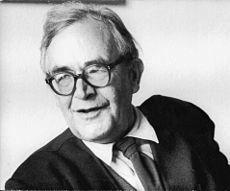
This post is from worship leader Mike Hale. Ever feel a gazillion miles away from God?   As worshippers of a God that we do not presently see (or that we see dimly and with ‘spirit eyes’—which is another subject in itself), we can feel as though the living, risen and ascended Lord Jesus is light years away from where we are, and awfully hard to reach—especially if we feel guilty and captive to our wrongs or the situation around us.   ‘But remember this’, said my theologian friend John Emmory McKenna (or Dr. John, as I affectionately call him), ‘he is closer to us than we are to ourselves!’ It was a catchy, comforting line, and McKenna has reminded me of it often.   First time was 1997 and Dr. John and I were having a much-needed talk about prayer and worship.   I was the one that needing the talk, and asking all the questions, generally summed up as, ‘what is God doing when we worship?’ Swiss theologian Karl Barth Long-time readers of this blog may recall mention of ...

Trinitarian ethics: Why are we gendered beings?

Last time we began an examination of Christian ethics from a trinitarian, incarnational perspective. We concluded that from this biblical viewpoint, ethics is fundamentally about sharing, through the Holy Spirit, in Jesus' own loving and living in our world. This time we look at a related topic - God's good design for humanity. Once again, we begin by asking,  Who is Jesus?  The answer is that as the second person of the Trinity, he is fully God; and through the Incarnation (which continues), he is fully human. Thus in Jesus we find not only the full reality of God, but also the full and perfect expression of God's design for humanity. Scripture speaks of this design in many ways, including telling us that God created humanity to be his image-bearer (Gen. 1:27). But in what way? For the answer, we look not to ourselves (for we are fallen), but to Jesus, who, in his humanity, perfectly and fully bears the image of the triune God. [Click  here  and here  f...

Trinitarian ethics: How then shall we live?

Our exploration of Trinitarian theology brings us to the important subject of Trinitarian ethics, asking, How then shall we live? In answering, we begin not by asking What? or Why? or How? but Who ? Specifically, Who is Jesus? What does this question have to do with ethics? The answer is, everything! Jesus, the incarnate Son of God, is  true humanity - the person who, alone, fully and perfectly expresses what it means to be human. And thus we look to him for our identity and for the definitive word concerning how we are to live (our ethics). As we do, we don't ask merely,  What would Jesus do?  but,  What is Jesus now doing? - recognizing that Jesus, who is still human (now glorified), is alive and ministering actively through the Holy Spirit in our world. So what is Jesus now doing? The answer is this: He does what he is, namely love.  This is not just any kind of love, but Love of the God-kind as it is being expressed through the glorified human...

We were made for communion with God

Image
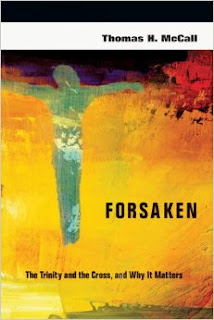
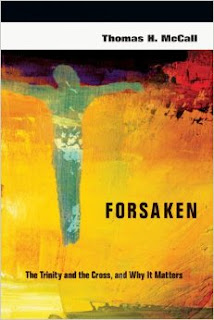
This post concludes the series exploring the book  Forsaken (The Trinity and the Cross, and Why it Matters)  by  Tom McCall . For other posts in the series, click a number: 1 , 2 , 3 , 4 , 5 , 6 , 7 . McCall notes that God created humanity "to know and experience the holy love of the triune life" (p143). He emphasizes this vital truth by quoting C.S. Lewis who addresses this issue in a comment on the importance of the doctrine of the Trinity: It matters more than anything else in the world. The whole dance, or drama, or three-Personal life is to be played out in each one of us: or (putting it the other way round) each one of us has got to enter that pattern, take his place in that dance. There is no other way to the happiness for which we were made.... If you want joy, power, peace, eternal life, you must get close to, or even into, the thing that has them. They are not the sort of prizes which God could, if he chose, just hand out to anyone. They are a great f...

God is for us!

Image
This post continues the series exploring the book  Forsaken (The Trinity and the Cross, and Why it Matters)  by  Tom McCall . For other posts in the series, click a number:  1 ,  2 ,  3 ,  4 ,  5 ,  6 ,  8 . In the last two posts we looked at divine impassibility and divine simplicity . This time we look at McCall's conclusions related to these attributes, noting views to be avoided and to be affirmed. The bottom line is this: God is for us!  Views to be avoided McCall first cautions us not to downplay or deny the reality of God's wrath: The temptation to downplay the wrath of God is understandable. The societal and cultural pressures to quietly ignore the biblical teaching are strong. The understanding that "God is love"--combined with the conviction that love and wrath are incompatible--is prevalent. But we should resist such temptations and avoid such conclusions. Too much is too clear from Scripture, and too much is...

Does God have two minds toward us? (divine simplicity)

Image
This post continues the series exploring the book  Forsaken (The Trinity and the Cross, and Why it Matters)  by   Tom McCall . For other posts in the series, click a number:  1 ,  2 ,  3 ,  4 ,  5 ,  7 ,  8 . Last time we looked at the doctrine of divine impassibility . This time we look at the doctrine of divine simplicity . Regarding this doctrine, McCall notes this: While it is appropriate to refer to the various divine attributes, and while it is fine to predicate different perfections of God, the doctrine of divine simplicity reminds us that such talk should not mislead us into thinking that God is literally made up of or composed out of various attributes or divine parts.... God, as ultimate Spirit is not a compounded or composite being (p75). Why does this matter? For many reasons, but chiefly because this doctrine reassures us that God's being is never divided and thus his divine attributes are never in conflict on...

Does God care? (divine impassibility)

Image
This post continues the series exploring the book  Forsaken (The Trinity and the Cross, and Why it Matters)  by  Tom McCall . For other posts in the series, click a number:  1 ,  2 ,  3 ,  4 ,  6 ,  7 ,  8 . An accurate discussion concerning God's love and wrath must account for the full doctrine of God, which includes the topics of  divine impassibility  and  divine simplicity.  In this post we'll look at what McCall has to say about the first. Does God suffer with those who suffer, or is he the "Unmoved Mover"? According to McCall, some misunderstand divine impassibility to mean that God, by definition, is without emotions ("affections"). From this perspective, God is seen to be "cold and detached, the 'Unmoved Mover'" (p64). Understandably, many modern Christians reject this viewpoint, instead embracing a "revisionist viewpoint," which states that... God is "relational" and "dynamic"... a God who is...

Understanding God's wrath and love

Image
This post continues the series exploring the book  Forsaken (The Trinity and the Cross, and Why it Matters)  by  Tom McCall . For other posts in the series, click a number:  1 ,  2 ,  3 ,  5 ,  6 ,  7 ,  8 . We'll now look at McCall's discussion of God's wrath in which he asks the question, "Did the death of Jesus make it possible for God to love us?" (p49). His answer is no, because the question presupposes the mistaken belief that God did not love us before Jesus died for us on the cross. The fact of the matter, revealed to us by Jesus, is that God has always loved us. And it was out of love and for love that God the Father sent his Son to become one of us, and as our representative to die and rise for us in order that we might enjoy full fellowship with God forever. God's wrath But what about the many scriptures that speak of God's wrath toward sinners? How do we reconcile God's wrath with his love? Does God have a "dar...

Jesus' cry of abandonment and Psalm 22

Image
This post continues the series exploring the book  Forsaken (The Trinity and the Cross, and Why it Matters)  by  Tom McCall . For other posts in the series, click a number:  1 ,  2 ,  4 ,  5 ,  6 ,  7 ,  8 . Last time  we looked at two arguments that McCall uses to defend the view that God the Father did NOT  abandon his Son at the cross. Now we'll look at his third argument, which has to do with understanding that Jesus' cry of abandonment ( My God, my God, why have you forsaken me? ) should be understood as referring to the full message of Psalm 22, not just the one sentence. In support of this view, McCall cites Matthew's and Mark's accounts. Clearly, both intend that their readers understand that the events at the cross echo the entire message of Psalm 22. For example, McCall notes that both Mat 27:27-31, 38-44 and Mark 15: 16-20, 25-32 tell of Jesus being mocked--a clear echo of Psa 22:6-8: 6 But I am a wor...

Does God like you?

I heard a sermon recently on the topic of anger. The preacher said something quite profound: It has taken me many years to understand something that has melted away layers of pent-up anger: God likes me! Has the preacher fallen prey to pie-in-the-sky, wishful thinking? Is he right - does God actually like him? Here's another question - does God like you? The answer is of great importance. The preacher was relating his personal struggle with a performance-based religion that says God relates to us based on how well we are (or are not) doing. This legalistic view suggests that God is never quite pleased with us - even when we are on our best behavior. This is a common view of God as our judge (and a harsh one at that) - a God who is a sort of cosmic Santa Claus, "making a list and checking it twice, gonna find out who's naughty or nice." One could hardly view this sort of God as liking us . However, the God revealed to us in the person and work of Jesus Chri...

Trinitarian life

As important as it is to understand trinitarian theology (orthodoxy), it is even more important to live the trinitarian life (orthopraxis). Note the words of Catherine Mower LaCugna in  God for Us: The Trinity and Christian Life : The doctrine of the Trinity is orthodoxy, right perception of God, and it calls for orthopraxis, right response to the glory of God. Jesus Christ and the Spirit are the standard for both orthodoxy and orthopraxis. Jesus Christ’s life and death, words and deeds, knowledge and love of God are normative for Christians. The power of God’s Spirit to convert the hardened heart and make the blind see is essential both for right worship, right knowledge, and right love....  The doctrine [of the Trinity] succeeds when it illuminates God’s nearness to us in Christ and the Spirit. But it fails if the divine persons are imprisoned in an intradivine realm, or if the doctrine of the Trinity is relegated to a purely formal place in speculative theology. I...

Did God forsake Jesus at the cross?

Image
This post continues the series exploring the book  Forsaken (The Trinity and the Cross, and Why it Matters)  by  Tom McCall . For other posts in the series, click a number:  1 ,  3 ,  4 ,  5 ,  6 ,  7 ,  8 . Last time  we saw how McCall shows that Jesus' cry of dereliction on the cross ("my God, my God, why have you forsaken me"), cannot be taken as indicating that the Father separated himself from his Son. McCall uses several arguments to debunk this wrong-headed (though popular) notion. In this post we'll look at two. First, McCall argues on the basis of God's own essential (and inseparable) triune nature. He quotes Bruce D. Marshall: God the Son can be truly Fatherless only if God the Father has genuinely given up whatever is necessary for his paternal relationship with his Son... The person of the Father is inseparable from the act of generation by which he eternally brings forth the Son. Without this act of genera...

Understanding God in the Old Testament

This blog often receives questions about Old Testament (OT) passages that seem to portray God in a way quite different than he is portrayed in the New Testament. In exegeting such passages, it is important to remember that OT references to God are not the full revelation of his being. That revelation comes only in the person and work of Jesus Christ. However, God did reveal something of his essential nature to Israel - a revelation recorded in the OT. Notable is God's self-disclosure in Ex 34:1-35. Let's note some key points. Having broken the stone tablets containing the Decalogue, Moses is directed by the LORD to make replacement tablets, so that God might restore his people to their covenant commitments, and thus to fellowship with him. Notice Ex 34:1-9: 1 The LORD said to Moses, "Chisel out two stone tablets like the first ones, and I will write on them the words that were on the first tablets, which you broke. 2 Be ready in the morning, and then come up on Mount...

My God, my God, why have you forsaken me?

Image
This post begins a series exploring the book  Forsaken (The Trinity and the Cross, and Why it Matters)  by  Thomas McCall . For other posts in the series, click a number:  2 ,  3 ,  4 ,  5 ,  6 ,  7 ,  8 . For a related post that looks at this topic through the eyes of multiple theologians, click here . Several years ago, I took Dr. McCall's class on the doctrine of God at Trinity Evangelical Divinity School. The primary focus was the doctrine of the Trinity, and a primary text was   The Christian Doctrine of God (One Being, Three Persons)   by Thomas F. Torrance. The class included thought-provoking discussions concerning various (and sometimes competing) theological perspectives on the Trinity. These discussions reinforced in my mind the importance of understanding the historic (Nicaean) roots of the Trinity doctrine - roots reflected in the aforementioned book and unpacked by Torrance in  The Trinitarian Faith  ...

Why study theology?

Image
Some see theology as an unnecessary, "high brow" distraction. They ask, Why do I need to study theology? The video embedded below (titled Theology Matters ) offers a helpful answer (you can also view the video at  http://youtu.be/A2DUKPUKgAI ).

knowing Jesus, and knowing who we are

When Jesus had spoken these words, he lifted up his eyes to heaven and said, “Father, the hour has come; glorify thy Son that the Son may glorify thee, since thou has given him power over all flesh, to give eternal life to all who thou has given him. And this is eternal life, that they know thee the only true God, and Jesus who thou has sent.” (John 17:1-3) Glorified how? What came next was betrayal, arrest, suffering, crucifixion and death. There would be no resurrection, ascension or Pentecost without the cross. But we see in confidence that what Jesus began he completed, and He is the Author of our Salvation, and the Captain and Perfecter of faith. Wise teachers remind us that Jesus is the reason humanity exists—not the other way around—and that we only find out who we ourselves are after first discovering who Jesus is, and how he glorified (and continues to glorify) the Father. His suffering and death is tied to ours, and his joy and new life becomes ours, as we too learn to glo...