Posts

Participation in Christ, part 5 (anthropology)

Image
This post continues a series looking at "Participation in Christ (An Entry into Karl Barth's Church Dogmatics)" by Adam Neder. To read other posts in this series, click on a number:  1 ,  2 , 3 , 4 ,  6 , 7 ,  8 ,  9 ,  10 . In chapter 3, Neder addresses Barth's biblically-informed, Trinitarian anthropology, noting that it views Jesus' humanity as inclusive of all humanity: The ontological determination of humanity [meaning the determination of humanity's fundamental being] is grounded in the fact that one man among all others is the man Jesus ...[he] alone establishes and reveals human nature... Barth's anthropology is an attempt to take this thought seriously, to follow it wherever it may lead, and to resist the temptation to either deviate from it or stop short of saying what must be said on the basis of it (p29, emphasis added). Accordingly, to know what human nature is, we "look to the place where it has been once and for all enacted and ...

Participation in Christ, part 4 (obedience)

Image
This post continues a series looking at "Participation in Christ (An Entry into Karl Barth's Church Dogmatics)" by Adam Neder. To read other posts in this series, click on a number:  1 ,  2 , 3 , 5 , 6 , 7 ,  8 ,  9 ,  10 . For Barth, our participation in the love and life of Jesus Christ is by a grace that involves obedience. Though obedience is sometimes construed in ways that are antithetical to God's grace, Barth sees obedience and grace linked within the covenant that is ours with God in Christ, our Lord: In showing His grace, God proves Himself both Savior and Helper... [His] exercising of lordship is kind as well as good... [Grace] rules by offering God to His covenant partner as Lord of the covenant (Neder, p19). Paradoxically, the covenant "rest" (freedom) we are given in Christ (by grace) is realized in obedience to Christ as Lord. According to Barth, God's grace sets us free first to hear Christ and then to obey what we hear him tell u...

Participation in Christ, part 3 (objective & subjective aspects)

Image
This post continues a series looking at "Participation in Christ (An Entry into Karl Barth's Church Dogmatics)" by Adam Neder. To read other posts in this series, click on a number:  1 , 2 , 4 , 5 , 6 , 7 ,  8 ,  9 ,  10 . In his chapter titled, Election and Being in Christ , Neder examines Barth's "Christocentric treatment of election as an aspect of the doctrine of God..." (p15). For Barth, these two core doctrines are deeply and intrinsically connected for Jesus himself is the content of election. Therefore, according to Barth, Jesus should be the church's sole criterion when thinking about the topic of election. If this were the case, Barth believes that the result in the church would be... ...joy, not terror; incomprehensible light, not incomprehensible darkness; clarity, not obscurity, [understanding that] ...in Jesus Christ God is freely and graciously for humanity rather than against it... This is not merely one variation of God's wil...

Joining Jesus in his ministry of reconciliation

This post is from  Charles Fleming , mission developer for GCI in the Caribbean. The most practical definition of mission that I know is this: Mission is joining Jesus in crossing a frontier (geographic, cultural, generational, life-experience) with tangible expressions of Jesus’ love (word and deed).  To illustrate, I want to share a powerful story told by pastor Ty Grigg on  The Ecclesia Network . It's titled It Starts with Lamenting . Pastor Ty's story Angela stood up to the podium and pulled out a piece of paper. Normally, during our worship liturgy, we watch an “icon,” that is, a short video or projected artwork that reveals something about the way the world is and the ways God reveals his glory in our world. This Sunday, we would hear a story of lament from Angela: My cry today, my lament today is for the Church, the bride of Christ, to be a voice--a beacon of hope, a light, a refuge in this time. By this time, I mean post-Trayvon Martin. As Angel...

Participation in Christ, part 2 (revelation & reconciliation)

Image
This post continues a series looking at "Participation in Christ (An Entry into Karl Barth's Church Dogmatics)" by Adam Neder. To read other posts in this series click on a number: 1 , 3 , 4 , 5 , 6 , 7 ,  8 ,  9 ,  10 . According to Neder, "Barth's conception of dogmatics is grounded in his understanding of revelation, which governs his doctrine of participation in Christ..." (p1). Barth stressed the priority of the Word of God, understood in its ultimate sense to be Jesus Christ, who "establishes an orderly fellowship between himself and human beings" (p1). Thus, "revelation is inseparable from reconciliation" (p1) as "an event of divine-human union" (p3). This equating of revelation with reconciliation, accomplished through the continuing event of the Incarnation, has significant implications, including that in Jesus, God "speaks to human beings in a creaturely form... through creaturely media" (p3). For Bart...

Participation in Christ, part 1

Image
This post begins a series looking at Professor Adam Neder's helpful book, " Participation in Christ (An Entry into Karl Barth's Church Dogmatics )." To read other posts in this series, click on a number: 2 , 3 , 4 , 5 , 6 , 7 ,  8 ,  9 ,  10 . Perhaps you've read parts of Barth's Dogmatics and found it rather difficult and daunting (6 million words in 13 volumes!). I'm thankful to Dr. Neder for writing this accessible book, which shows how  participation in Christ is a key concept in Barth's theology. Neder comments: According to Barth, revelation, election, creation, reconciliation and redemption all take place "in Christ," and their meaning and content may only be rightly comprehended in him. In fact, the very being of all humanity itself is objectively included in the being of Jesus Christ, and is likewise subjectively (i.e., by individual people) realized in him. In these acts of inclusion and realization, the creature is incorp...

The gospel and other religions

A friend recently asked me some related questions: How should Christians think of other religions? I know that we are supposed to love our neighbors and even our enemies, and I believe that all humanity, in Jesus, is included in God's love and life. But how do we convey this truth to those who follow other religions if we are not supposed to offend them? I feel my friend's angst here because, in part, he is reacting to the cultural trend that says we must be tolerant of all viewpoints and critical of none. Perhaps he also wrestles with the idea that God has reconciled himself to all people despite their religious beliefs. First, let me comment on the idea that God has reconciled all humanity to himself. This universal reconciliation is entirely God's work of grace, in Christ, apart from any effort or merit of our own. This means that people are not reconciled to God because of their religious belief or practices, Christian or otherwise. This reconciliation was accomp...

Barth on the doctrines of God and ethics

The video embedded below is of a helpful lecture from David McGregor, sharing Karl Barth's insights concerning the essential connection between God's nature and Christian ethics. When talking about ethics, Barth always started with God. His belief was that God's being (as the tri-personal God who is love) and God's doing, are inseparably linked. In  Church Dogmatics he proclaimed: "God is who He is, and lives as what He is, in that He does what He does." Barth then noted that we have in the person (being) and work (doing) of the Incarnate Son of God, Jesus Christ, the definitive revelation of who God is and what God does. Barth then noted that through our relationship (union and communion) with Jesus we participate by grace in God's own being and doing. Thus Barth approached Christian ethics as our participation in the love (being) and life (doing) of Christ himself. This relational view of ethics, grounded in a tri-personal, relational view of God, ...

Torrance on theosis

Image
Early church theologians often mentioned a belief in the concept of  theosis , (from  apotheosis  in Greek, sometimes referred to as deification or divinization  from  deificatio in Latin). The concept flows from the biblical teaching that humans, in union with Christ and through the enablement of the Spirit, may participate in the divine nature (see, for example,  2Pet 1:4 ). Hold on Tight by Liz Lemon Swindle (used with artist's permission) As noted by Myk Habets in Theosis in the Theology of Thomas Torrance , T.F. frequently made reference to the idea of theosis. Here is a quote from Habet's book: Torrance’s earliest mention of theosis occurs amidst a discussion of Christology, when, commenting on the relevance of the hypostatic union for men and women he writes, "And in this God-Man we partake in grace, as members of his body, reconciled to God through him and in him, and even it is said, are incomprehensibly partakers of Divine...

On mission with God: Living Sent

Image
Ed Stetzer Recently on  The Exchange  blog, missiologist Ed Stetzer summarized a Trinitarian theological perspective on mission. His post was titled "What Mission is and Why it Matters." Here are excerpts (and click here for a similar previous Surprising God post): During the past half-century, there has been significant shift from understanding mission as simply the geographical expansion of the Christian faith from the West to the non-Christian world towards a more expansive understanding of mission as God's mission--particularly within a Trinitarian theological framework. This tenant has become known as the  missio Dei...   In short, "mission" refers back to its fixed basis - to the movement of the Father in sending His Son and Spirit. God, who is ontologically "missionary" and, as God is the acting subject in His self-revelation, He maintains the initiative in this activity. This divine missionary activity includes yet another noteworth...

Concerning dialectic theology

The Trinitarian theology of Karl Barth, T.F. Torrance and others is sometimes referred to as "dialectic" or "dialectical" theology, meaning that it seeks to integrate the tensions, paradoxes and ambiguities that are inherent in Christian theology. Though Barth objected to using this term (it has a wide array of meanings), it might be helpful for Surprising God readers to understand the concept, since incarnational Trinitarian theology does teach that inherent in the revelation of Jesus Christ are viewpoints that, to our limited human understanding, do seem irreconcilable. This is particularly so with respect to the "dialectic tension" between the objective (universal) and subjective (personal) aspects of the union that God has forged with all humanity in and through the God-man, Jesus Christ. From an objective/universal viewpoint, Scripture declares that God has reconciled (past tense) all humanity to himself through one one God-man Jesus Christ ( ...

Ray Anderson on the two narratives

Image
Check out this short GCI video with Ray Anderson discussing how a narrative/trinitarian theology helpfully frames pastoral ministry.   For an earlier Surprising God post that quotes Anderson, click here . I highly recommend Anderson's book The Soul of Ministry .

Participation not imitation

Image
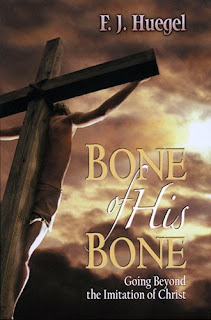
In Bone of His Bone, Going Beyond the Imitation of Christ, missionary F.J. Huegel notes that our calling as Christians is not to imitate Christ but to participate in Christ. Rather than merely semantic, this distinction between "imitation" and "participation" is fundamental to understanding our calling as Christians. It also is a corrective to viewing Christian living (ethics) in a way that tends toward legalism, which then can lead to despair and burnout. Huegel begins his analysis by noting some of the "oughts" in Scripture often cited in addressing Christian behavior: We are to walk as Jesus walked (I John 2:6). We are to love our enemies (Matt. 5:44). We are to forgive as Jesus forgave - even as He who in the shame and anguish of the Cross looked down upon those who blasphemed Him, while they murdered Him, and forgave (Col. 3:13). We are to be aggressively kind towards those who hate us, yes, we are actually to pray for those who despitefully use u...

OT law--what is its role for Christians?

Image
In the Christianity Today  article " Learning to Love Leviticus ," Christopher J.H. Wright notes that to properly understand the nature and purpose of God's law, we must account for several contextual issues: God's purpose for Israel in the world as the people of God the nature of the ancient near-Eastern cultures in which Israel existed how the nature of law and, most particularly, the nature of Torah (which means "instruction") helps us understand its application the nature of our Triune God as a relational being--helping us understand why he would have a law in the first place and how he would apply and uphold it in relationship with his covenant people Wright then explains the application of the Torah (OT law) to Israel and then to Christians. Here are some illustrative quotes: God gave Israel his law in order to shape them into a society that would reflect God's character and values in the midst of the nations—what we might call a mission...

Love God and Do What You Want

Image
Trinitarian theologian Paul Metzger (pictured at left) recently gave a sermon entitled "Love God and Do What You Want." The context of his sermon was a conference discussing the calling that Christians have to engage the culture. Paul addresses the motivation for cultural engagement. To listen to an audio recording of Paul's helpful sermon,  click here .

Spiritual formation precedes mission

Image
An axiom of our Trinitarian, incarnational faith is that God does what God is.  Said another way, Scripture teaches us that there is no disjunction between God's doing and God's being. For example, God loves (does loving things) precisely because God is love (his being is that of a triune communion of love). As we live into our union with Christ (our journey from union to communion with God), any disjunction between who we are in Christ and what we do in Christ is progressively healed. I say "progressively healed" because it is a journey on which we continue to bear the marks (the "stain of sin") of residual disjunction between being and doing that results from our fallen nature. Like Paul in Romans 7, we decry the reality that though we desire to do good, our actual doing often reflects more our old nature (in Adam) than our new nature, which is our true being in Christ. Because we want to do good, we often look for strategies and programs to assist...

Marty Folsom: living within God's relating life

Image
In the short video below, trinitarian theologian Dr. Marty Folsom talks about twin realities that are the basis of his understanding of trinitarian theology: that the triune God exists in relationship  that we as humans live within God's relating life   For additional videos from Dr. Folsom,  click here .

Colyer on Torrance: the error of dualism

Image
Elmer Colyer In How to Read T.F. Torrance, Elmer Colyer addresses what theologian Tom Torrance says about two forms of dualism that, unfortunately, shape the theology of many Christians: Torrance believes that the church has had to struggle repeatedly with the problem of dualism.... Dualism connotes the division of reality into two incompatible or independent domains. Torrance's repudiation of cosmological and epistemological dualism is decisive for grasping his understanding of the mediation of Christ...(pp57-8). Cosmological dualism This form of dualism asserts a disconnection between God and the world (cosmos) - an idea that arose in the early church out of Greco-Roman philosophy. It then emerged in the middle ages based on a Newtonian cosmology, yielding a deistic view of God. Sadly, this dualism remains common in our time (think of Bette Midler singing about the God who is "watching us from a distance"). Those holding this viewpoint tend to dismiss as merely...

On journey with Jesus

Image
Jesus' disciplemaking pathway [Updated on 1/20/2018] When viewed through the lens of an incarnational Trinitarian theology, Scripture shows us that, by God's grace, all humanity is  on  journey with Jesus . Those who follow the Spirit as disciples of Jesus journey from non-believer, to believer, to worker (and some to leader) who actively participate with Jesus in what he is doing to fulfill the Father's mission to the world. This journey with Jesus, which originated in the Father's heart before creation, was acted out in Israel's experience under the Old Covenant. It then came to fullness under the New Covenant in the union  forged between God and humanity through Jesus' life, death, resurrection and ascension, and the sending of the Holy Spirit. As a result of who Jesus is (the union of God and humanity), and what he accomplished as our representative, all humanity has been included in God's love and life---God, in Christ, has reconciled himsel...

The need for spiritual discernment

Image
A core conviction of our Trinitarian, incarnational faith is that the Father, through his Son, by the power of the Spirit is present and at work in our world. This work is God's mission, which embraces and includes all people everywhere. Scripture then tells us that the Spirit forms, gifts and sends the church to participate with Jesus in God's mission to the world and refers to this participation as "ministry" (meaning "service"). And as noted by Andrew Purves in  The Crucifixion of Ministry , we must put to death any wrong-headed ideas that this service is our own (as in "what we do for Christ"). The truth (which sets us free) is that it is Jesus' ministry--his service to the world, in the power of the Spirit. And how wonderful that the Holy Spirit calls and equips us to take part! Speaking of taking part, Dietrich Bonhoeffer often referred to the ministry of Jesus as "place sharing." He understood that Jesus, through th...

C.S. Lewis on Theosis

Image
The video below contains a fascinating 42-minute-long lecture from Myk Habets (pictured at right). Myk teaches in the Carey Graduate School at Carey Baptist College in New Zealand. His lecture is titled, "You Have Never Met a Mere Mortal (what evangelicals can learn from C.S. Lewis's vision of salvation)." Its focus is Lewis' emphasis, following Athanasius and other church fathers, on the sometimes misunderstood (and often overlooked) doctrine of  Theosis,  which views salvation as human participation in the divine life of the Trinity. Enjoy (and rejoice!).    http://youtu.be/Je-4Zga61BE

Can we all just get along?

Image
It saddens me, and I find it ironic, that Christians sometimes get nasty toward one another when disagreeing about theology. After all, Christian theology is the study of the Triune God who declares himself to be love! Of course, many people are passionate about theology (it takes one to know one!). However, the nature of theology is that it is "faith seeking understanding"--not faith that has arrived at perfect understanding. God alone is perfect, and good theology (even if imperfect) accurately points to him, and thus away from itself. Because our theological formulations are inherently imperfect, there have arisen within the historic, orthodox Christian faith multiple theological streams that diverge on certain points. This is so even though the proponents of these streams embrace the same orthodox Christian doctrines (as summarized in the ancient creeds). So what are we to do? Well, I don't think we need to lay aside our theological distinctives and the disagree...