Posts

Inhabiting the Christian Year: Advent
Image
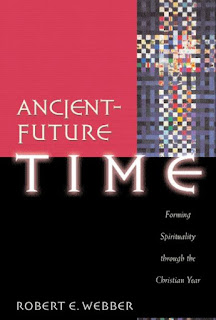
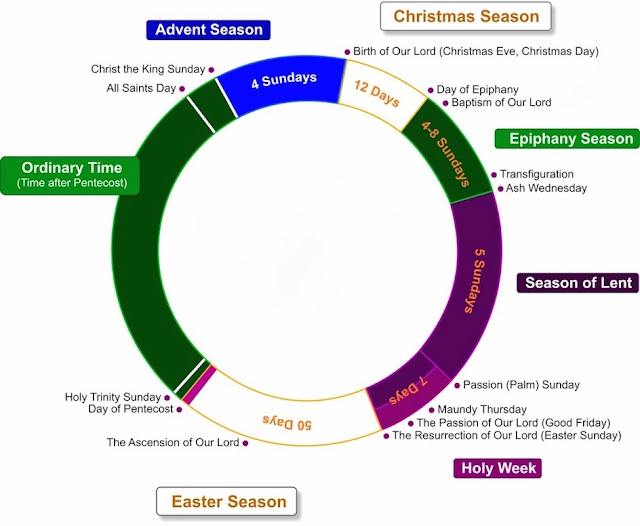
This is part 2 of a series looking at the Western Christian year (liturgical calendar). For other posts in the series, click a number:  1 , 3 , 4 , 5 ,  6 ,  7 ,  8 . (Updated 11/2021) The Western Christian worship year begins with Advent---a season spanning the four Sundays prior to Christmas (in 2021 the first Sunday of Advent is November 28). Robert E. Webber, writing about the meaning of Advent in Ancient Future Time: Forming Spirituality through the Christian Year , shares this comment: Advent is the time when God breaks in on us with new surprises and touches us with a renewing and restoring power. In Christian-year worship and spirituality we call upon God for a new breaking in, a fresh outpouring of his Spirit. (p. 38) The Advent Season is a powerful and important reminder that God is not remote, aloof or uninvolved. It tells us that God has come, is coming and will come again ("advent" means "coming"). This truth helps offset a message that is pr...
Inhabiting the Christian Year: introduction

Image
This is part 1 in a series looking at the Western Christian year (liturgical calendar). For other posts in the series, click a number: 2 , 3 , 4 , 5 ,  6 ,  7 ,  8 . In this series, we'll take a journey through the Western Christian Calendar. Doing so will help us see how the ancient liturgy of the church helps us "inhabit" the gospel, which is the story of the Triune God's work for our salvation, centered on Jesus. I believe that this liturgy, rightly used, is of tremendous value in helping us understand (both cognitively and experientially) the gospel as viewed through the lens of an incarnational Trinitarian theology. Some thoughts about liturgy In this series, we'll be exploring the Christian worship year as presented in the liturgical calendar of the Western Christian Church---the calendar that serves as the organizing framework of  The Revised Common Lectionary   (RCL). The RCL shapes the liturgy of many Protestant and Anglican-Episcopalian denominat...

How theology affects ministry

Image
Ted Johnston   A few years back, I had a conversation with J. Michael Feazell, then Vice President of Grace Communion International (GCI). We talked about how incarnational Trinitarian theology impacts the practice of Christian ministry. A video of that conversation is posted on GCI's website at  www.gci.org/media/videos/ted-johnston-how-theology-affects-ministry/ .

"You're Included" interviews with Trinitarian theologians

Image
GCI's video program  You're Included  features half-hour interviews with theologians on various aspects of Trinitarian theology. The catalog below (in alphabetical order by last name of the interviewee) links to more than 60 interviews conducted with 12 theologians. For a transcript of each interview, click on "program transcript" on the individual video page, or click  here  and here  for PDF documents with transcripts of multiple interviews. Jeremy Begbie ---You're Included interviewee. Interviewee Interview topic Ray Anderson Starting Theology With Jesus. The importance of having our theological viewpoint based on God's revelation of himself in Jesus Christ. Ray Anderson God and the Prodigal Son. Relating our lives to God’s reality, what God has become in becoming human, adoption, the parable of the prodigal, our necessary connection with Christ, and the emergent church. Jeremy Begbie Music and Theology.  Dr. Begbie shares...

Did God forsake Jesus at the cross?

Image
Did God forsake Jesus at the cross? Tom McCall gives a thoroughly Trinitarian answer in his book  Forsaken ( click here for my review). The question is also addressed by several Trinitarian theologians in interviews on GCI's You’re Included   video program. Following are quotes from those interviews, beginning with Ray Anderson: "The Trinity says that God is both above and he is below, God is involved. The one who dies on the cross has to be as fully God as the Father in heaven. Jesus says, 'God, my Father, why have you forsaken me?' This has to be, not only the language of Psalm 22, the human lament of forsakenness that Jesus takes on his own lips, but it has to be that God himself has, in a sense, assumed a humanity estranged from God, so that atonement begins in Bethlehem. "T.F. Torrance said you have to go back to the fact that the one who was born from the womb of Mary was born to assume the human estrangement, to assume the sentence of deat...

What about evangelism?

Image
I realize that the word "evangelism" makes many who read this blog uncomfortable. Some even think evangelism is contrary to incarnational Trinitarian theology. Let me ease your mind, by quoting from the book,  Gospel, Church, and Ministry , in which T.F. Torrance is quoted as writing this: The church today in its faint-heartedness and skepticism seems to have lost its nerve…adapting the gospel to modern man instead of bringing modern man face to face with the gospel…. The Church cannot discharge the task that Christ has laid upon it without offering unadulterated witness and engaging in pure evangelism, cost what it may in scorn and ridicule or oppression. If at the point the Church seeks to save its life it will lose it, but here if it is ready to lose it for Christ’s sake and the gospel’s it will find it. (p. 160, emphasis added)  Strong words these, and in this post I want to address the topic of engaging in what T.F. calls "pure evangelism." My goal is not...