Posts

On Being a Single or Married Christian (preaching resource for Epiphany 3: January 21, 2024)

Image
This post exegetes 1 Cor. 7:1-40, providing context for the RCL Epistle reading for 1/21/2024 (Epiphany 3). This exegesis draws on commentary from Warren Wiersbe ("Bible Expository Commentary") and Bruce Winter ("New Bible Commentary"). Christian marriage (public domain via Wikimedia Commons) Introduction Prior to the seventh chapter of 1 Corinthians, Paul has dealt with sins of division and immorality hurting the church in Corinth. And now beginning in chapter 7, he answers questions submitted by the Corinthians (“the matters you wrote about…,” verse 1). He begins with their questions concerning being single or married as a Christian. Paul's answers address specific concerns that include unusual circumstances. For example, he refers to the “present crisis” (v 26), which archaeology has shown involved prolonged and severe famine together with multiple earthquakes and resultant social and political upheaval. Normal life (including normal family relations) at that...

Consider Our Triune God (preaching resource for Epiphany 2: January 14, 2024)

Image
This post exegetes 1 Corinthians 6:9-20, providing context for the RCL Epistle reading for 1/14/2024 (Epiphany 2). This exegesis draws on commentary from Warren Wiersbe ("Bible Expository Commentary") and Bruce Winter ("New Bible Commentary"). Ruins of the temple of Apollo with acrocorinth behind (Wikimedia Commons) Introduction   In addition to being divided by competing factions, the church at Corinth was being disgraced by the sinful behaviors of some of its members—two behaviors in particular: It is actually reported that there is sexual immorality among you… (1Cor. 5:1a)  The very fact that you have lawsuits among you means you have been completely defeated already… (1Cor. 6:7a)  Some of the believers in Corinth were behaving like non-believers (and sometimes worse). Not only were they caught up in gross sexual immorality, they were misusing the legal system to settle disputes within the church. Of course, no church is entirely free from sin—indeed the church i...

Proclaiming the King: Baptism of Jesus (preaching resource for Epiphany 1: January 7, 2024)

Image
This post exegetes Mark 1:1-13, providing context for the RCL Gospel reading for 1/7/2024 (first  Sunday of Epiphany, which focuses on the baptism of our Lord). This exegesis draws on commentary from Alan Cole ("New Bible Commentary") and John Grassmick ("Bible Knowledge Commentary"). Introduction The kingdom of God (in its relationship to the cross of Christ) is the key organizing theme of Mark's Gospel—a theme encountered in the section of Mark spanning 1:1-8:6. This section addresses the declaration of the kingdom . Here Jesus is preaching (and healing) throughout Palestine. Though crowds flock to him, most people fail to understand him. Moreover, the religious leaders bitterly oppose him—opposition that will intensify all the way to the cross. Throughout this section, Jesus keeps what commentators refer to as the Messianic secret —he does not tell people openly that he is the Messiah. In Mark 1:1-13 we see how Jesus' is proclaimed as Messiah (King) throu...

From Slavery to Sonship (preaching resource for December 31, 2023)

Image
This post exegetes Galatians chapter 4, providing context for the RCL Epistles reading for 12/31/2023. This exegesis draws on commentaries from John Stott and G. Walter Hansen. Scripture quotes are from the Revised Standard Version (RSV). Introduction In Galations chapters 1 through 3, we learn from Paul that it is in union with Christ that Jews and Gentiles alike receive the inheritance promised to Abraham. Thus any attempt to gain that inheritance through observing the Law of Moses (the foundation of the Old Covenant) is foolish. In chapter 4, Paul emphasizes the temporary nature of the law and shows that living under it is a form of slavery that is to be abandoned in order to live in the freedom that is the privilege and calling of the children of God under the New Covenant. "St. Paul" by Rembrandt (public domain via Wikimedia Commons) Slave or son?  Galatians 4:1-10 NRSV Verses 1-2 : The Law of Moses was given to Israel under the Old Covenant in order to illustrate God’s ...

Responding to God's Words of Promise (preaching resource for Advent 4, December 24, 2023)

Image
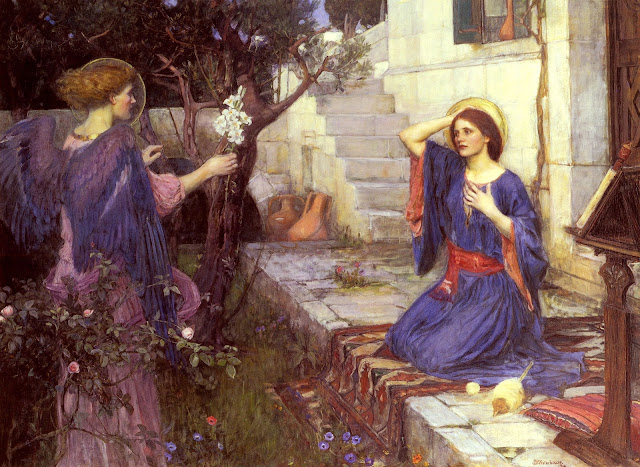
This post exegetes Luke 1:5-38, providing context for the RCL Gospel reading for 12/24/2023 (the fourth Sunday of Advent). This exegesis draws on commentary from Warren W. Wiersbe ("Bible Expository Commentary") and I. Howard Marshall ("New Bible Commentary"). Introduction Luke writes to share the gospel with all who read his retelling of Jesus’ story, which fulfills God's many promises to all humanity. He begins in chapter 1 by contrasting the response of several people to God’s promises. In this post we'll look at the response of two people: Zechariah (who responds with unbelief) and Mary (who responds with faith). It is Mary's response that we are called to emulate. "The Annunciation" by Waterhouse (public domain via Wikimedia Commons) Zechariah’s response  of unbelief It was a time of darkness in the Jewish nation—no prophetic word had come from the Lord for some 400 years. The Jewish spiritual leaders were shackled by tradition and tainted...

How To Be a Gospel-Shaped Church (preaching resource for Advent 3, December 17, 2023)

Image
This post exegetes 1 Thessalonians 5:12-28, providing context for the RCL Epistle reading for 12/17/2023 (third Sunday of Advent). This exegesis draws on John Stott's commentary. Early Christian Worship in the Catacombs (public domain via Wikimedia Commons) Introduction   In the second half of 1 Thessalonians chapter 5, the apostle Paul calls on the church to strengthen their life together as 'brothers' in the family of God. He does so by addressing three vital aspects of gospel-shaped Christian community: the church's leadership, the church's fellowship, and the church's worship.  The church's leadership  1 Thessalonians 5:12-13 Jesus Christ, the Chief Shepherd, delegates to under-shepherds ('pastors') the oversight of the flock which Jesus bought with his own blood (Acts 20:28). We do not know what prompted Paul to write verses 12 and 13. Perhaps some church members had been disrespectful towards their leaders. Perhaps some leaders provoked this re...

The Day of the Lord (preaching resource for Advent 2, December 10, 2023)

Image
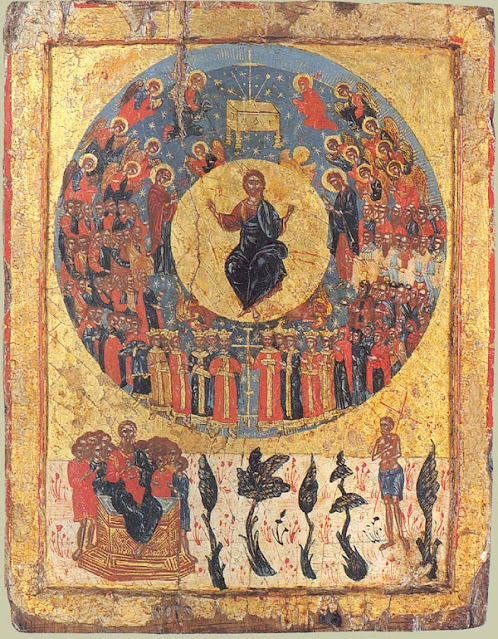
This post exegetes 2 Peter 3, providing context for the RCL Epistle reading for 12/10/2023 (the second Sunday of Advent). It draws on commentary from from Warren Wiersbe ("Bible Expository Commentary") and David Wheaton ("New Bible Commentary"). Icon: Second Coming (via Wikimedia Commons) Introduction  Already in this second epistle of Peter, the apostle has characterized the false teachers troubling the churches in Asia Minor as “arrogant” (2Pet 2:10b) heretics (2Pet 2:1). They are an “accursed brood” (2Pet 2:14b) of blasphemers (2Pet 2:12a). They are also “unreasoning animals” (2Pet 2:12b); “blots and blemishes” (2 Pet 2:13b) who are “slaves of depravity” (2Pet 2:19). And now Peter adds another charge—they are “scoffers” who pursue “their own evil desires” (2Pet 3:3). In their scoffing, they “willingly forget” (2Pet 3:5) God’s word concerning the judgment that will accompany Jesus’ return (2Pet 1:16, 3:13). Peter scoffs right back at them, reminding us all of thre...